
Imagine this: A customer browses your D2C fashion store at 11 PM, adds three items to the cart, and leaves without buying.
What happens next?
If you only have one channel to reach them, you might send an email. Maybe they see it. Maybe they don’t.
But what if you could follow up with:
- A WhatsApp message the next morning
- An SMS offer by afternoon
- A Personalised email by evening
All coordinated automatically?
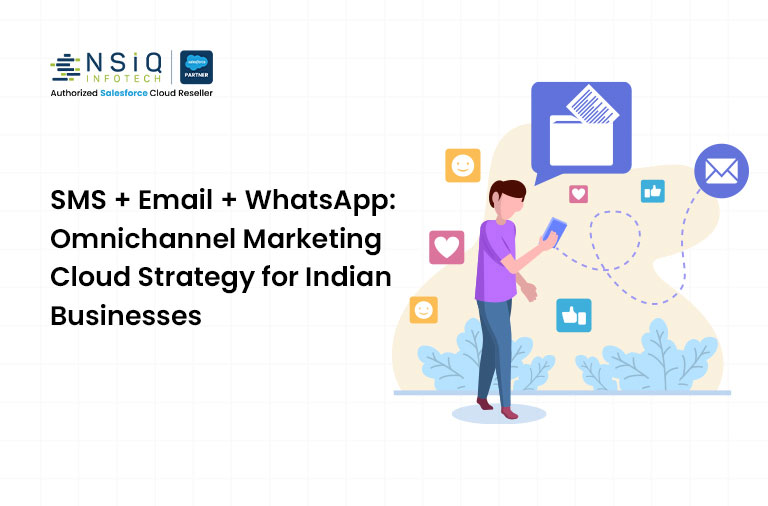
That is the power of omnichannel marketing. And for Indian businesses, this is no longer optional. It is essential for growth in a market where customers are spread across multiple platforms and expect fast, relevant communication.
In this guide, we break down exactly how Indian D2C brands and digital marketers can build a winning SMS + Email + WhatsApp omnichannel marketing cloud strategy using practical steps, real-world examples, and tools you can start using today.
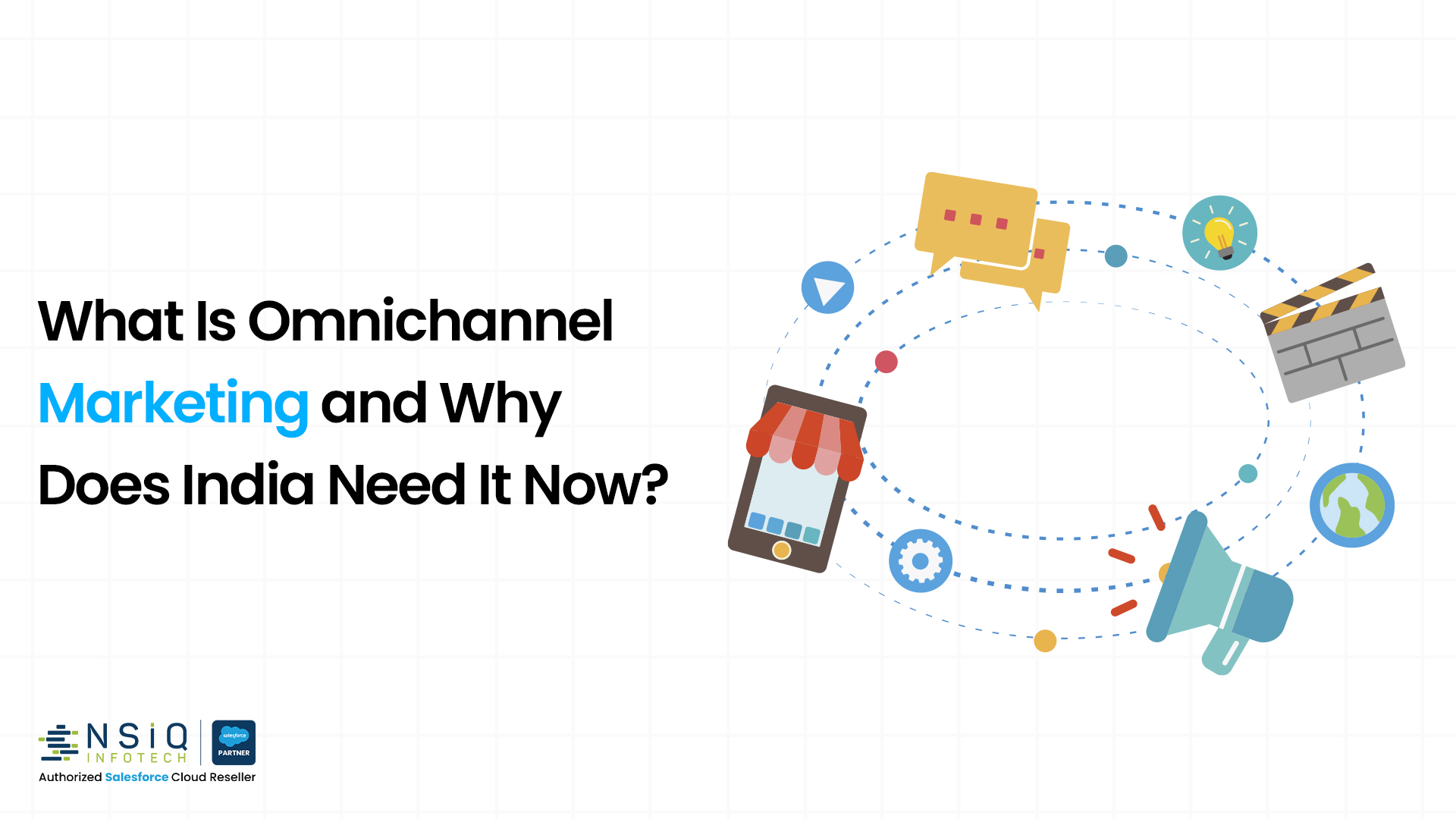
Omnichannel marketing means creating a seamless experience across every channel your customers use:
- SMS
- Push notifications
- Social media
Unlike multichannel marketing, where each channel works separately, omnichannel ensures all channels are connected and respond to customer behaviour in real time.
Why It Matters in India
India is a mobile-first market.
- 700+ million Indians access the internet through smartphones
- 500+ million active WhatsApp users in India
Indian customers discover products on Instagram, compare on Google, get deals on WhatsApp, and buy after an SMS reminder.
If your business only uses one channel, you are losing revenue.
Statistic
500 Million+ WhatsApp users in India making it one of the most powerful communication channels for D2C brands.
Source: Meta / Statista
2. The Three Pillars: WhatsApp, SMS, and Email
SMS Marketing
- Instant delivery
- Works without internet
- Reaches every phone
Best for:
- OTPs
- Flash sales
- Delivery alerts
- Urgent promotions
Email Marketing
- Rich content & HTML templates
- Lower cost for large volumes
- Strong for B2B & finance sectors
Best for:
- Newsletters
- Detailed offers
- Policy updates
Why All Three Together?
Using all three channels together can:
- Deliver 3x to 5x higher conversions
- Reduce churn
- Increase customer lifetime value
Mini Case Study: Mumbai Fashion Brand
A Mumbai-based D2C kurta brand used an omnichannel platform.
Before: Cart abandonment rate = 72%
After a 3-step recovery flow:
- WhatsApp message
- SMS reminder
- Email with coupon
Recovery improved by 38% in 60 days.
3. Why Multichannel Alone Is Not Enough
Many Indian businesses use:
- SMS tools
- Email platforms
- WhatsApp tools
But they run separately.
Result?
Customers receive the same message three times in one day.
Or worse — they buy a product and then receive a discount coupon for the same item two hours later.
Problems with Siloed Channels
- No shared customer data
- Duplicate messages
- Poor timing
- No unified ROI tracking
- Weak personalisation
Key Insight
According to McKinsey & Company, brands that personalise across channels generate 40% more revenue.
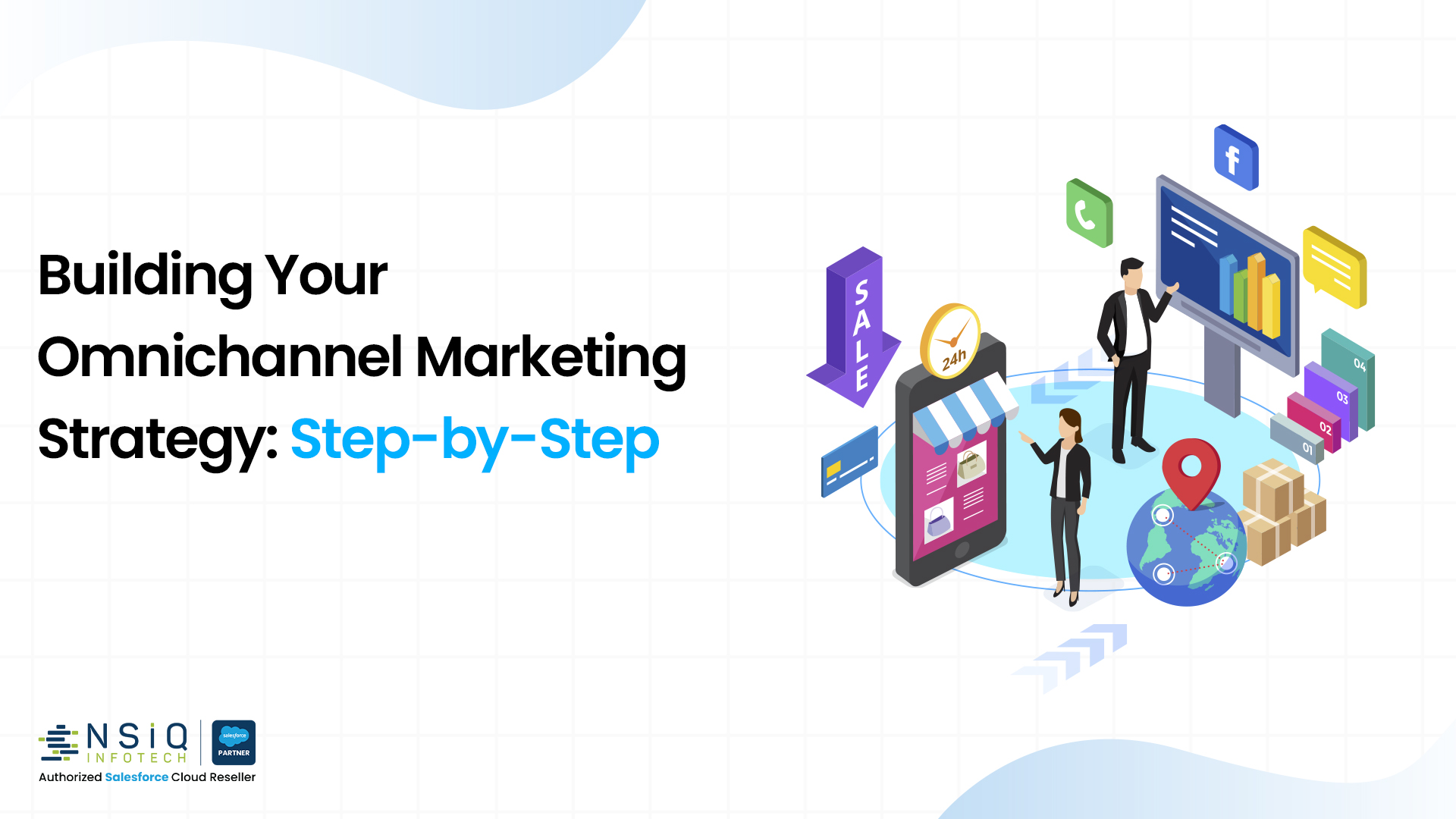
Step 1: Unify Customer Data
Create one profile with:
- WhatsApp opt-ins
- Phone number
- Purchase history
- Browsing behaviour
Step 2: Segment Your Audience
Examples:
- New vs Returning customers
- High-value vs Low-value
- Fashion vs Electronics buyers
- Funnel stage
Step 3: Map Customer Journey
Example:
- Discovery → Email
- Consideration → WhatsApp catalogue
- Decision → SMS offer
- Post-purchase → WhatsApp updates + Email invoice
Step 4: Build Automated Workflows
Example:
- Cart abandoned → WhatsApp after 1 hour
- No open → SMS after 12 hours
- No purchase → Email after 24 hours
Step 5: Personalise Every Message
Use:
- Name
- Last viewed product
- Location
- Preferred language (Hindi, Tamil, Bengali etc.)
Step 6: Measure & Optimise
Track:
- Open rate
- CTR
- Conversion rate
- Revenue by channel
- Unsubscribes
5. Channel-Specific Best Practices for India
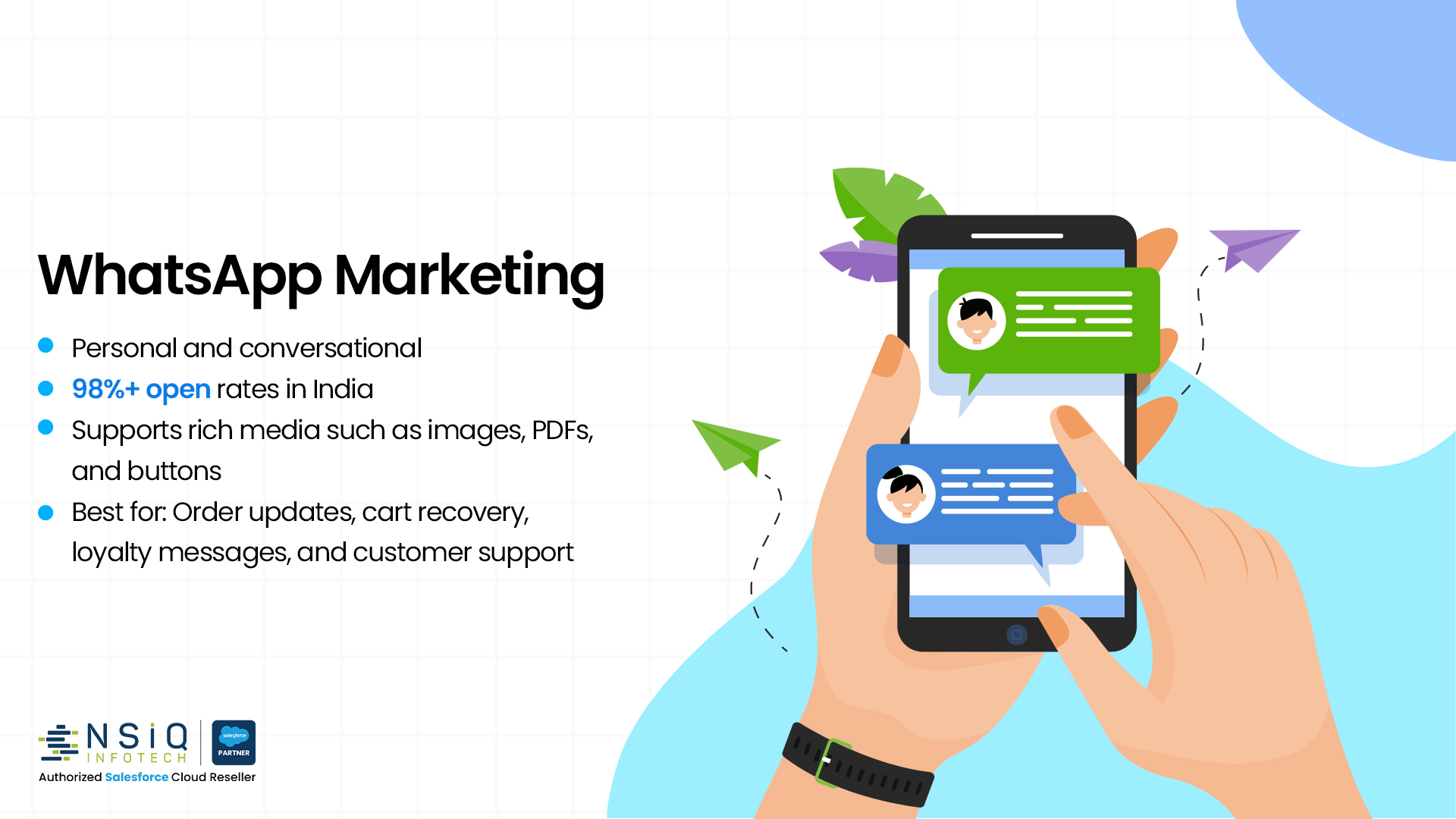
WhatsApp Marketing
Use only official WhatsApp Business API.
Best Practices:
- Always get opt-in consent
- Use local language
- Use catalogue feature
- Use quick reply buttons
- Use for order updates & loyalty
Statistic
Businesses using WhatsApp in multi-channel strategy report 47% higher ROI.
Source: Meta Business Research
SMS Marketing
Best Practices:
- Keep under 160 characters
- Clear CTA
- Send 10 AM–1 PM or 5 PM–8 PM
- Use branded sender ID
- Use TRAI-compliant software
Email Marketing
Best Practices:
- Subject lines with numbers perform better
- Segment audience
- Mobile-friendly design
- Use festivals: Diwali, Eid, Onam, Pongal
- Use drip sequences
6. Industry Focus: E-Commerce & Finance
For E-Commerce Brands
Typical Flow:
- Welcome email + coupon
- Browse but no cart → Email + SMS
- Cart abandon → WhatsApp + SMS + Email
- Purchase → WhatsApp confirmation + Invoice
- Delivery → Review request + Loyalty offer
Bengaluru Grocery Brand
Reduced CAC by 32% in 6 months.
Repeat purchase improved from 18% to 41%.
For Finance Brands
Use:
- SMS for OTPs & alerts
- Email for statements & policies
- WhatsApp for EMI reminders
Ensure compliance with:
- SEBI
- IRDAI
- RBI
7. Choosing the Right Platform
Look for:
- Native WhatsApp API integration
- TRAI-compliant SMS gateway
- Built-in email marketing
- Unified dashboard
- Regional language support
- Advanced analytics
- Scalable pricing
Why NSIQ INFOTECH
NSIQ INFOTECH helps Indian businesses build omnichannel marketing systems with:
- WhatsApp API
- SMS automation
- Email marketing
- Unified analytics dashboard
Whether startup or enterprise, NSIQ INFOTECH scales with your growth.
8. Statistics That Prove Omnichannel Works
287% Higher Purchase Rate
Customers engaged across 3+ channels buy at 287% higher rate.
Source: Omnisend
₹1 Spent = ₹42 Return
Email marketing average ROI = 4200% globally.
Source: Litmus
1. What is omnichannel marketing?
Integrated marketing across channels where all data works together.
2. Is WhatsApp marketing legal in India?
Yes, using official WhatsApp Business API with consent.
3. Best platform for India?
Use platforms with WhatsApp API, SMS compliance, email, analytics, and language support.
4. How much does it cost?
₹2,000 to ₹5,000/month for startups, more for enterprise.
5. Best time for WhatsApp messages?
Tuesday to Friday, 10 AM–12 PM or 6 PM–9 PM.
6. Can SMS go to DND numbers?
Promotional SMS cannot. Transactional SMS can.
7. How often should I message?
- WhatsApp: 1–2/week
- SMS: 2–4/month
- Email: 1–2/week
8. Do regional languages help?
Yes. They can improve CTR by 2x to 3x.
9. Is omnichannel only for big brands?
No. Even small D2C brands can start.
10. How long for results?
Usually 30–60 days for early gains.
Conclusion
The era of single-channel marketing is over.
Indian customers are everywhere:
- SMS
They expect brands to meet them where they are with relevant, timely communication.
Key Takeaways
- WhatsApp, SMS, and Email each have unique strengths
- Automation + personalisation drive results
- Regional language + compliance matter in India
- Unified customer data is the foundation
- Constant testing creates growth
Ready to Build Your Omnichannel Strategy?
Talk to NSIQ INFOTECH and get a custom roadmap for your business.