
Introduction
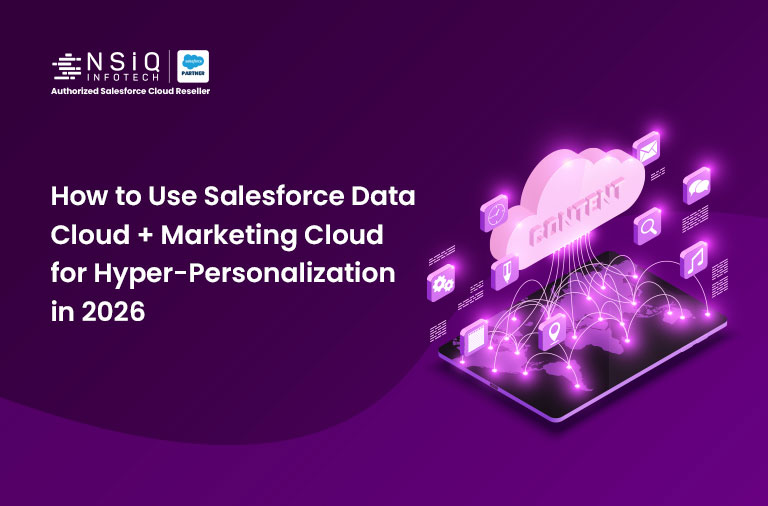
Think about the last time a brand made you feel like they truly understood you. The right message arrived at the right moment, on the right channel. That is hyper-personalization — and in 2026, it is no longer a luxury. It is the standard your customers expect.
The challenge most marketing teams face is that their data is scattered. CRM data lives in one place, website behavior in another, purchase history somewhere else. Nobody has the full picture, and campaigns end up being generic at best and annoying at worst.
That is exactly the gap that Salesforce Data Cloud and Salesforce Marketing Cloud, used together, are built to close.
In this guide, you will learn how to combine these two platforms to deliver genuinely personalized experiences at scale — using real-time data, smart segmentation, and AI-powered decisions.
Traditional personalization means putting a customer’s first name in an email subject line. Hyper-personalization goes much further. It uses real-time behavioral signals, full purchase history, predictive AI, and cross-channel context to deliver experiences that feel individually crafted.
Put simply:
Basic personalization asks “Who is this person?”
Hyper-personalization asks “What does this specific person need right now, based on everything we know about them?”
Why This Matters
- 80% of consumers are more likely to buy from a brand when they receive personalized experiences — McKinsey & Company
- Companies that use advanced personalization see 3.5× higher revenue growth — Boston Consulting Group
- 71% of consumers feel frustrated when an experience is not personalized — Salesforce
Salesforce Data Cloud
Salesforce Data Cloud is a real-time customer data platform built natively inside Salesforce.
It pulls data from:
- CRM
- Website
- Mobile apps
- E-commerce platform
- Support tickets
- Third-party data providers
Core Capabilities
- Identity resolution
- Real-time data ingestion
- Calculated insights
- Native integration
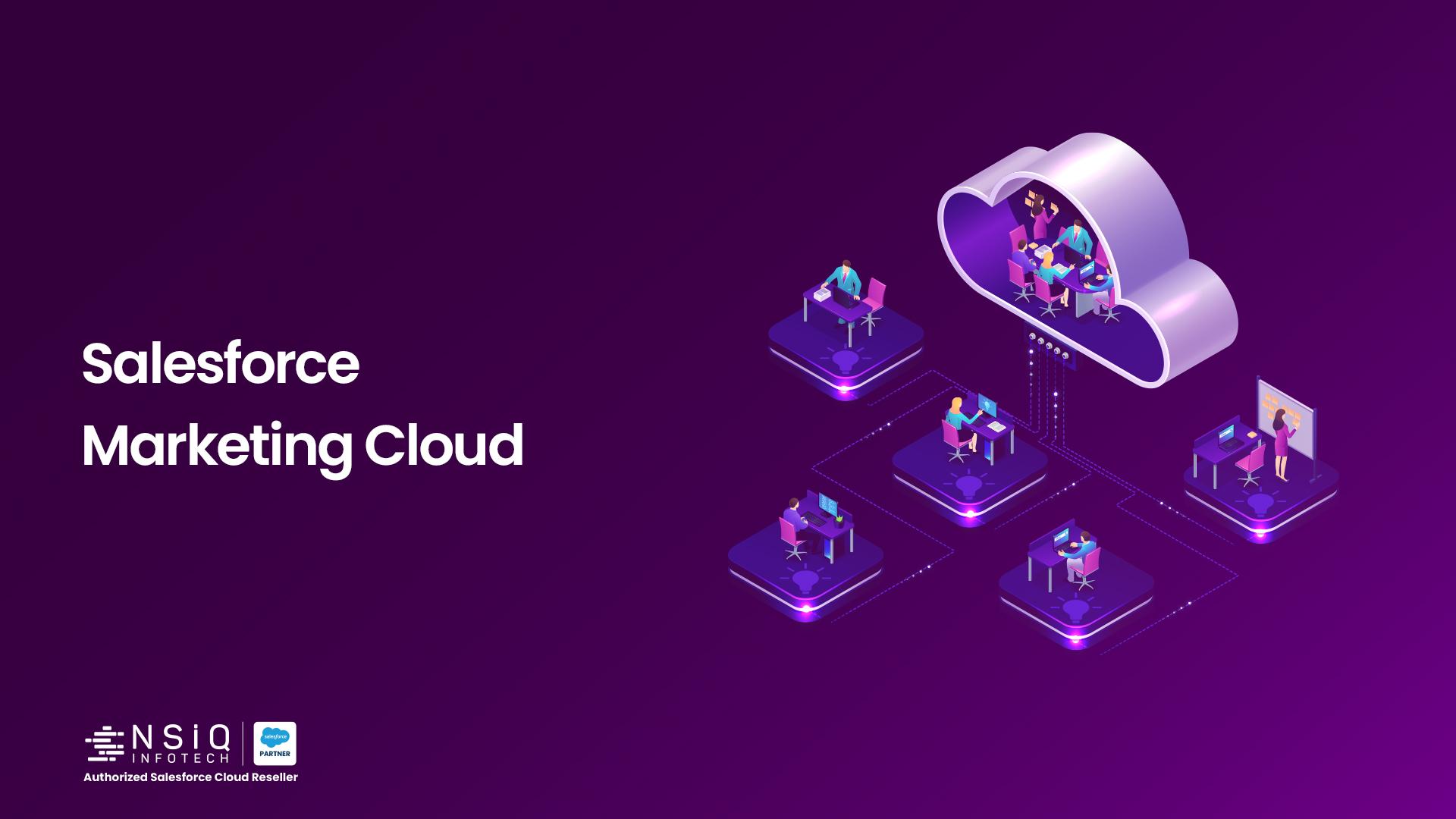
Salesforce Marketing Cloud is an enterprise marketing automation software suite.
Key Components
- Email Studio
- Journey Builder
- Mobile Studio
- Advertising Studio
- Einstein AI
- Intelligence (Datorama)
How They Work Together — The Missing Link
Marketing Cloud alone is powerful, but it depends on data quality.
- Data Cloud = Brain (data + insights)
- Marketing Cloud = Execution (campaigns + journeys)
Together, they enable real-time, personalized marketing.
The Real Problems This Stack Solves
- Data silos
- Stale segments
- Generic journeys
- Manual effort
- Broken attribution
Step-by-Step: Setting Up Hyper-Personalization
Step 1 — Unify Your Customer Data
Connect:
- CRM
- Website
- App
- E-commerce
- Support
Create unified profiles.
Step 2 — Build Smart Real-Time Segments
Examples:
- High-value customers at churn risk
- New mobile users showing interest
- Enterprise prospects showing intent
Segments update automatically in real time.
Step 3 — Activate Segments in Marketing Cloud
Push segments directly into Marketing Cloud Data Extensions.
No:
- CSV exports
- Manual uploads
- IT dependency
Step 4 — Design Personalized Journeys
Example flow:
- Entry trigger
- SMS
- Ads
- Conversion
Step 5 — Apply Einstein AI
Einstein enables:
- Send time optimization
- Content selection
- Engagement scoring
- Next best action
Step 6 — Measure and Optimize
Track:
- Engagement
- Conversion
- Revenue
Improve continuously.
6-Step Framework (Quick View)
- Unify Data
- Build Segments
- Activate
- Design Journeys
- Apply AI
- Measure
Before
- Same newsletter
- 8% churn
After
- 5.3% churn
- 34% reduction
- 4.2× engagement
Common Mistakes to Avoid
- Waiting for perfect data
- Over-segmentation
- Treating as one-time campaign
- Ignoring governance
- Misalignment between teams
How NSIQ INFOTECH Helps
NSIQ INFOTECH provides:
- Data Cloud setup
- Segment strategy
- Journey design
- AI optimization
1. Difference between Data Cloud and Marketing Cloud?
Data Cloud = data platform
Marketing Cloud = campaign execution
2. Do I need both?
Yes for hyper-personalization.
3. Implementation time?
8–12 weeks initial, 6–9 months full.
4. Is Data Cloud a CDP?
Yes, with AI + real-time features.
5. Can Marketing Cloud integrate with other CRM?
Yes.
6. What is hyper-personalization?
Real-time AI-driven personalization.
7. How does Einstein help?
Optimizes timing and content.
8. What data can be used?
CRM, web, app, e-commerce, support.
9. Is it for small businesses?
Best for mid to enterprise.
10. How segmentation improves?
Real-time + AI-driven.
11. GDPR compliance?
Yes.
12. Real-time triggers?
Yes.
13. Golden Record?
Unified profile.
14. Measure ROI?
Track revenue + engagement.
15. Best industries?
Retail, finance, SaaS, healthcare.
Conclusion
Hyper-personalization is now the baseline expectation.
Using Salesforce Data Cloud and Salesforce Marketing Cloud together enables:
- Unified data
- Real-time insights
- AI-driven campaigns