
Manufacturing Solution in Salesforce: A Case Study

nsiQ
Salesforce Partner
October 22, 2026
3 min Read
Client Requirement
The client is a manufacturing business that sells to other companies. Its sales, factory, dispatch and finance teams each kept their own records, so nobody could quickly see where an enquiry, quote, order or payment stood. The client wanted one connected system in Salesforce that follows each customer from the first enquiry to the final payment, covering:
- Enquiries and the deals that grow out of them
- Quotes with a clear status and a PDF that can be sent to the customer
- Orders that show their stage in the factory
- Shipments with courier and delivery details
- Invoices and payments linked to the order
- A simple view of the whole business for management
Challenges
- Cold enquiries. Enquiries came from many sources, and some were followed up late or never.
- Many quote versions. Quotes lived in separate files, so nobody was sure which version the customer received.
- Lost orders. After confirmation, sales could not see whether an order was being made or already shipped.
- Late payment chasing. Billing was separate from the customer record, so paid and pending amounts were unclear.
- Repeated data entry. Each team used its own tools, so the same details were typed more than once.
Solution
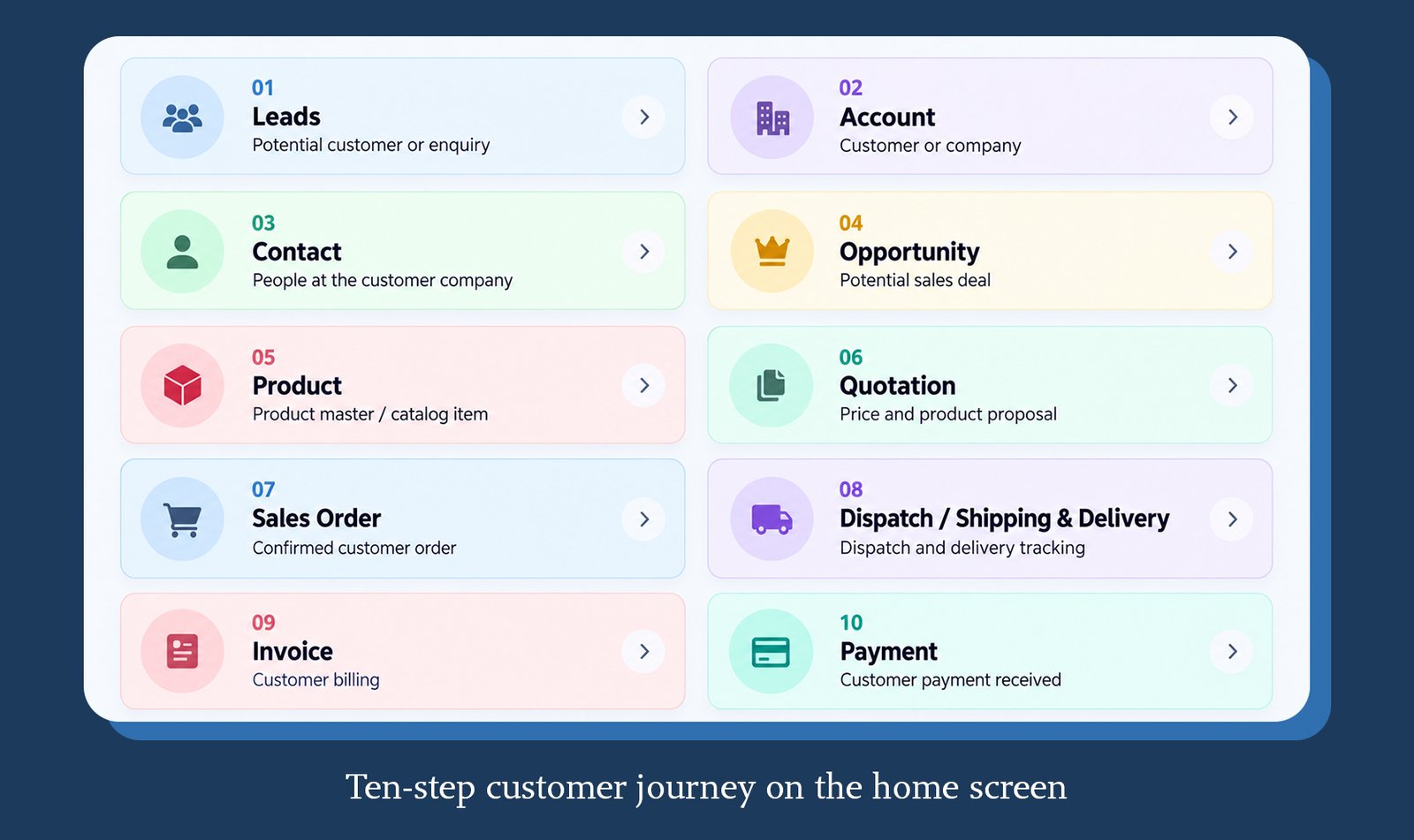
We built a manufacturing solution on the core Salesforce platform, with Sales Cloud at its centre. The customer journey was split into ten simple steps (Lead, Account, Contact, Opportunity, Product, Quotation, Sales Order, Dispatch and Delivery, Invoice and Payment) and placed on the home screen, so any team member can see how the business runs.
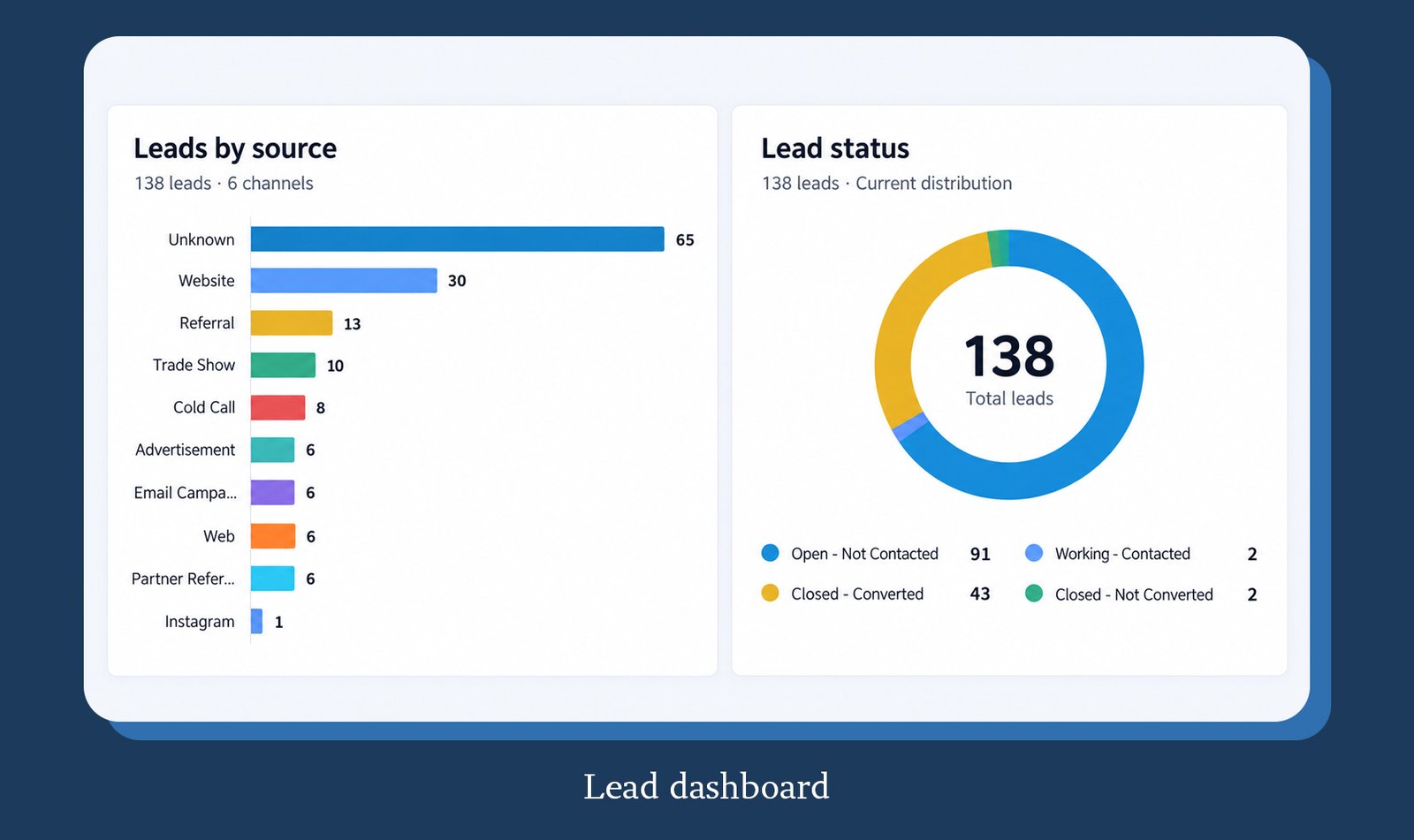
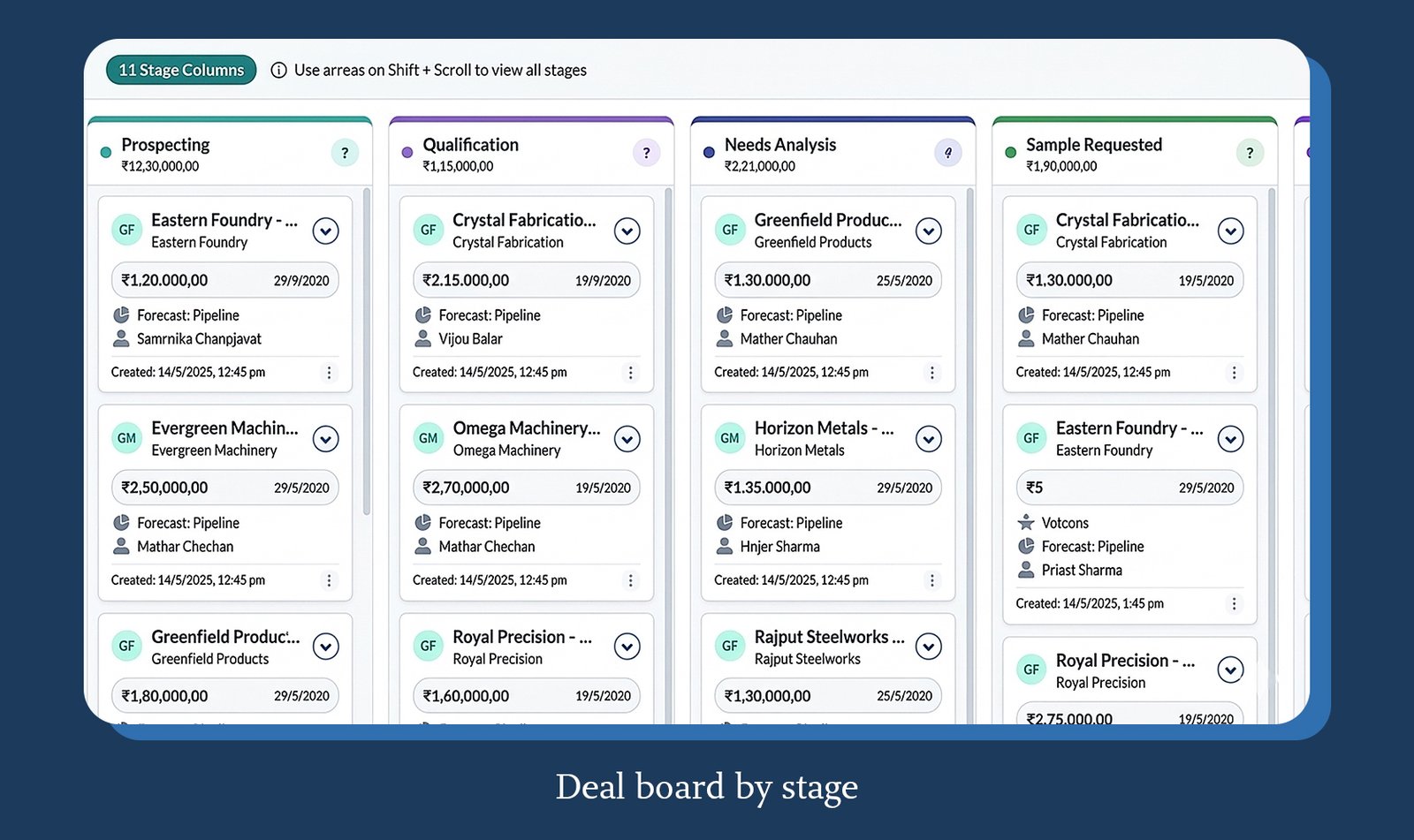
Each step has its own simple screen. Enquiries show their source and status. Deals sit on a board and move through stages that match how the company really sells, such as sending samples and agreeing a price. Quotes are created from the deal using saved products and prices, and can be emailed as a PDF in one click.
Once a quote is accepted, it becomes an order that carries its stage in the factory's own words: Confirmed, In Production, Ready to Ship, Dispatched or Delivered. Shipments record the courier, tracking number and expected delivery date. Invoices are created from the order and show the total, the amount paid and the amount pending. A customer overview rates each customer Hot, Warm or Cold and shows how much has been paid so far.
This is a Sales Cloud based solution. It is not Salesforce Manufacturing Cloud, which is a separate product built around sales agreements and account-based forecasting.
Implementation Screenshots
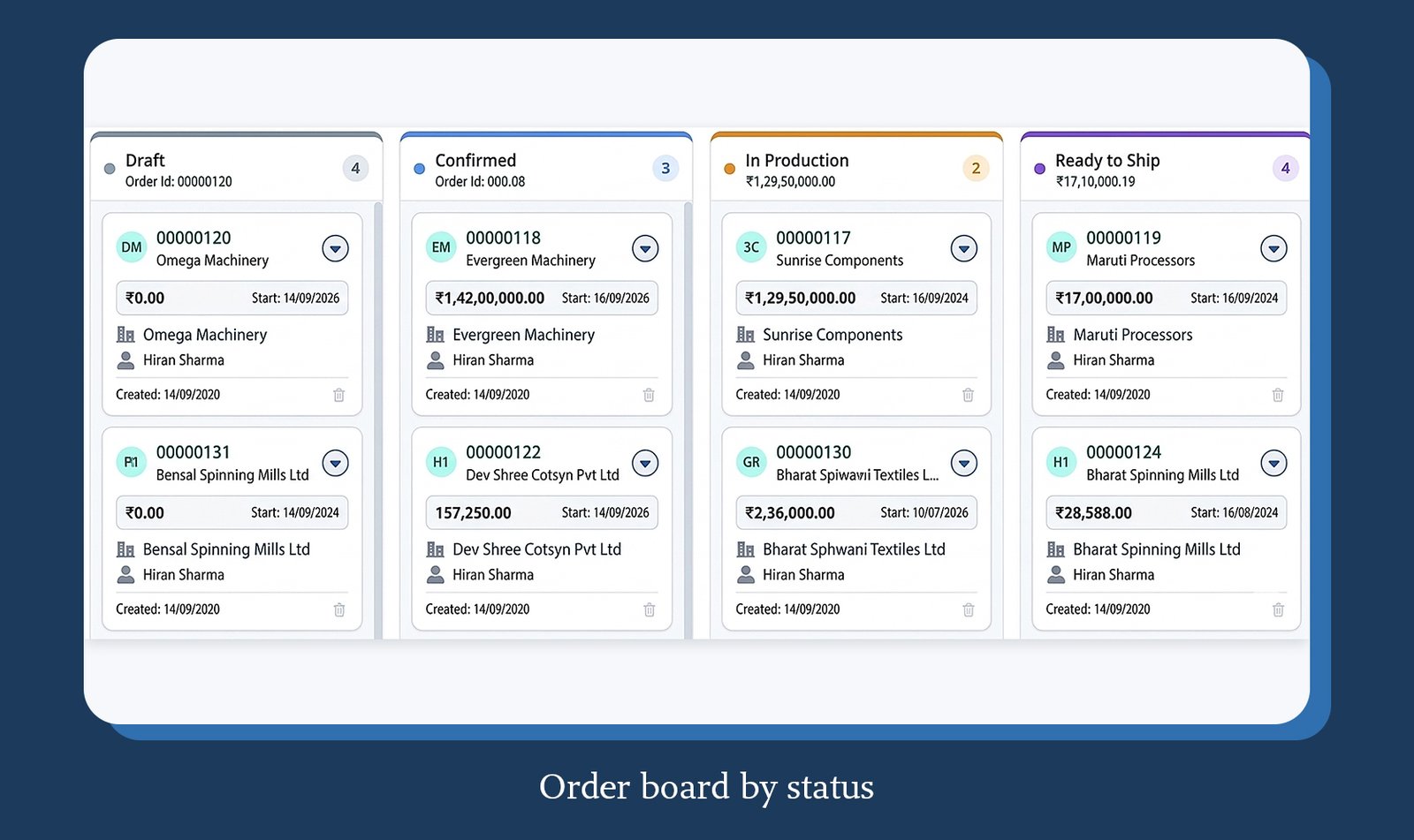
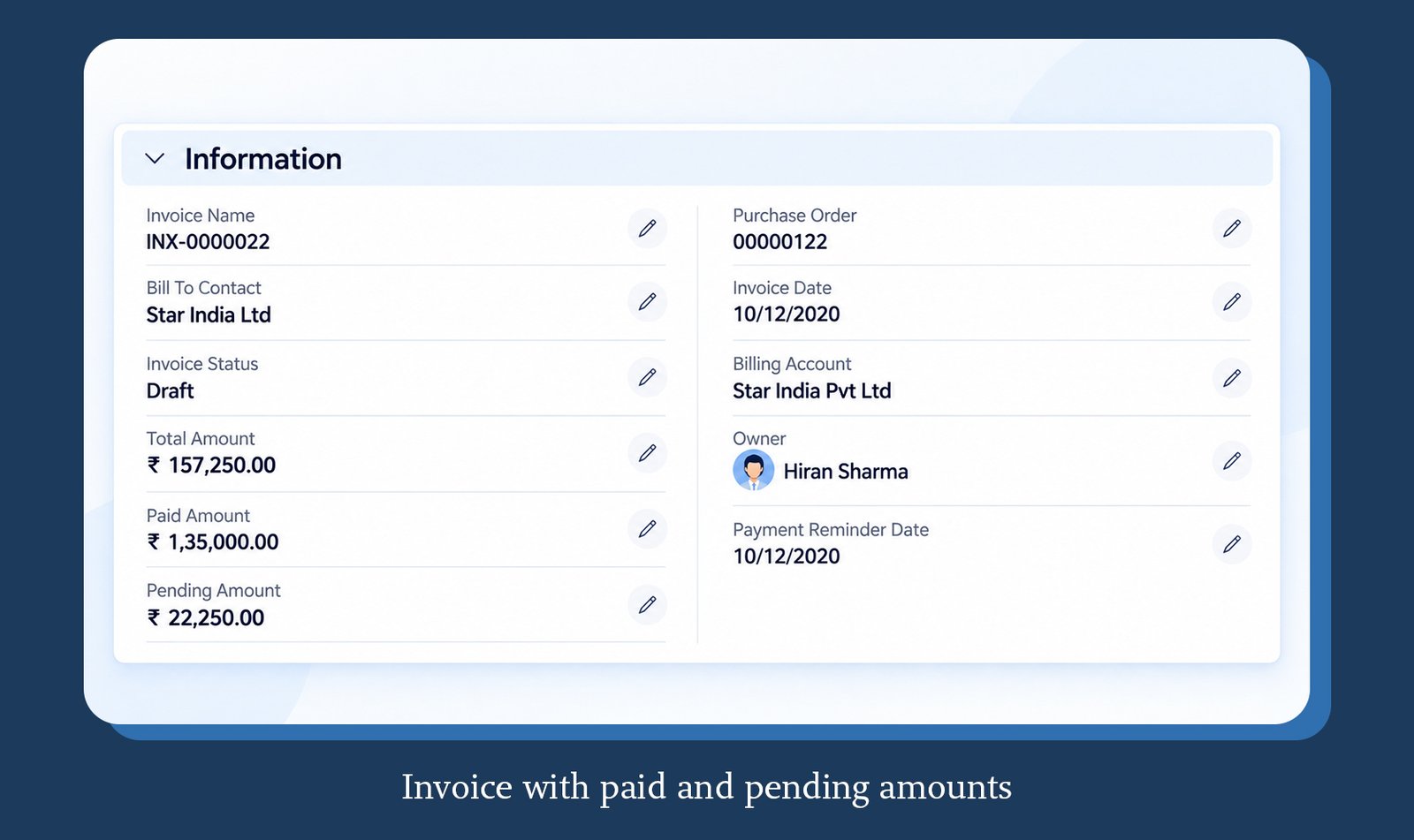
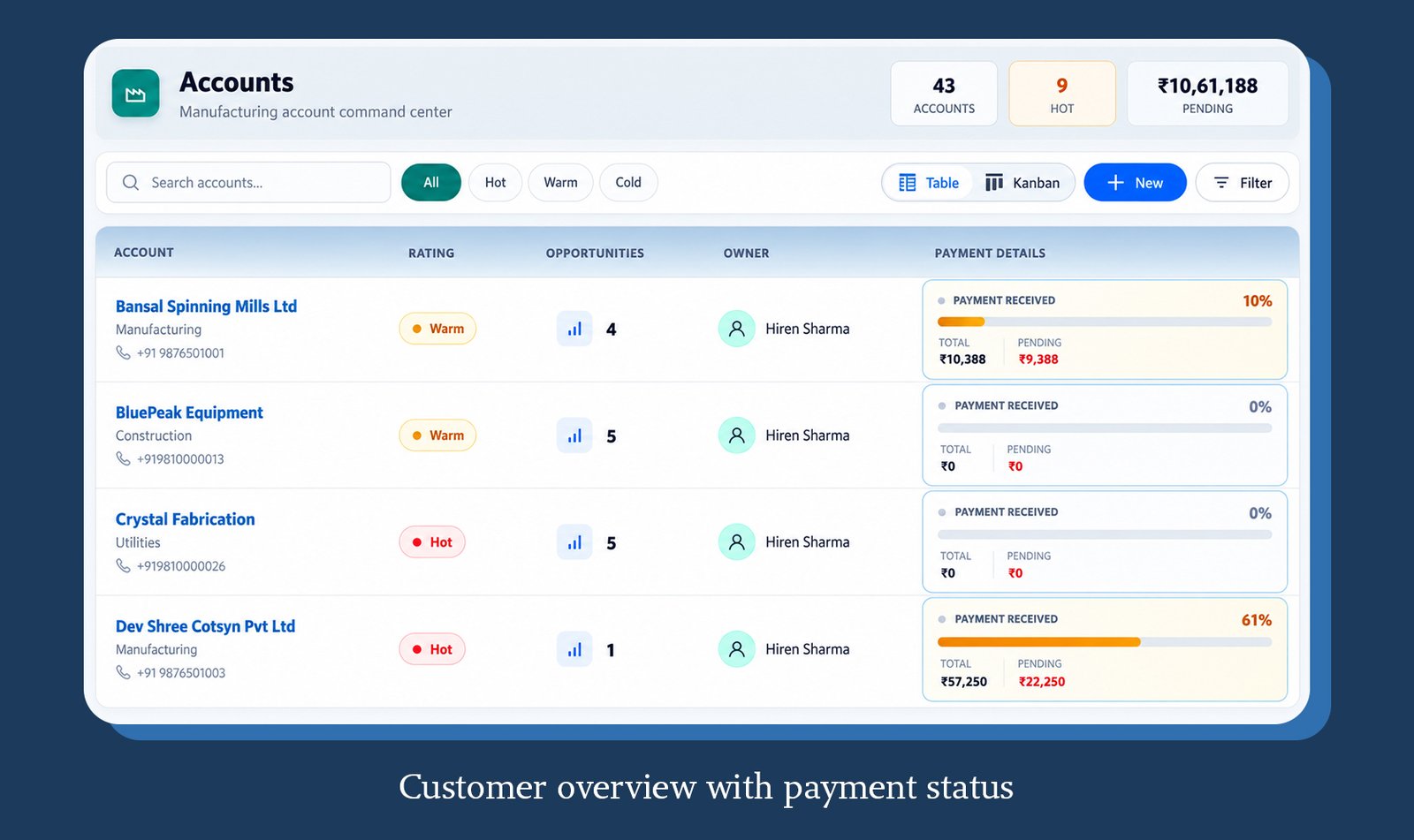
Results
After the solution went live, every team worked from the same picture of the customer:
| Aspect | Before | After |
| Customer records | Spread across spreadsheets, emails and chats | One connected record from first enquiry to final payment |
| Enquiry follow-up | Some enquiries were followed up late or missed | Every enquiry has a source, an owner and a status |
| Quotes | Several file versions, unclear which one the customer received | One quote per deal, with a status and a PDF in one click |
| Order tracking | Sales had to phone the plant to ask where an order stood | Anyone can see Confirmed, In Production, Ready to Ship or Delivered |
| Delivery updates | Courier details shared over calls and messages | Courier, tracking number and expected date stored on the shipment |
| Billing and payments | Billing sat apart from the customer record | Total, paid and pending amounts shown on the invoice and customer overview |
| Management view | Updates collected by asking people | Dashboards and a live snapshot on the home page |
| Residual limitation | Production planning and stock control are not part of this solution | Handled in the existing ERP, which can be connected if needed |
Conclusion
The client needed every team to see the same story about a customer, from the first enquiry to the final payment. By connecting enquiries, deals, quotes, orders, shipments and invoices in Salesforce, and by naming the stages in the factory’s own words, the solution replaced scattered records with one clear view.
The approach is simple to repeat: map the journey first, use your own stage names, and start with enquiry to order before adding delivery and billing. One known limit remains. Detailed production planning and stock control stay in the ERP, and the two systems can be connected when needed.

Have a similar project in mind?
Let's discuss how Salesforce can transform your operations too.
Have A Look At
Our Success Stories
"Over the years, NSIQ Infotech has successfully delivered innovative Salesforce solutions to businesses across various industries. Explore some of our success stories and discover how we've helped clients streamline operations, improve productivity, and accelerate growth."

How Salesforce Helped a Manufacturing Company Reduce Service Delays and Improve ROI
Read More
Fixing Special Character Rendering in Visualforce PDF Quotations
Fixing Special Character Rendering in Visualforce PDF Quotations Investigated and fixed the issue where special…
Read More
UNI Bank’s Success with Salesforce Marketing Cloud
UNI Bank’s Success with Salesforce Marketing Cloud showcases how the bank transformed its marketing operations…
Read More
Sales Cloud Implementation for a Restoration Company
Sales Cloud Implementation for a Restoration Company streamlined lead management, customer tracking, and sales processes…
Read More
Salesforce Experience Cloud for Job Seekers
Salesforce Experience Cloud for Job Seekers provides a personalized self-service portal where candidates can create…
Read More
GTM CoPilot App Exchange Integration With Salesforce Sales Cloud
GTM CoPilot AppExchange Integration with Salesforce Sales Cloud enables seamless synchronization of go-to-market insights, sales…
Read More