How Sales Cloud Agentforce Is Redefining B2B Sales in Manufacturing 2026

Introduction
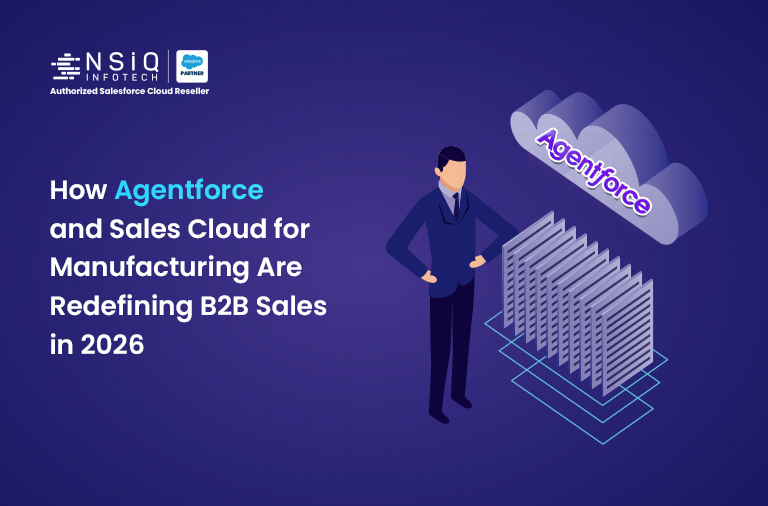
The manufacturing sector has reached a digital tipping point. In 2026, the traditional model of reactive selling is being replaced by the Agentic Enterprise. By integrating Agentforce Sales Cloud with Sales Cloud and industry-specific tools, organizations are moving beyond simple automation to autonomous operational excellence.
For leaders exploring Salesforce for manufacturers, the combination of autonomous agents and real-time data is not just an upgrade—it is a complete redefinition of the B2B value chain.
The Shift to Autonomous Sales Operations
In the 2026 landscape, the most significant change is the transition from assistive AI to autonomous agency. While previous versions of Salesforce in manufacturing industry relied on humans to trigger every action, Agentforce Sales Cloud now operates as a proactive Digital SDR.
These agents autonomously capture leads from messaging and web channels, qualify them against complex Ideal Customer Profiles (ICPs), and book meetings directly into a human seller’s calendar.
For high-volume environments, this means B2B sales automation Salesforce capabilities can now handle lead nurturing with Automatic Limit Management, ensuring outreach stays within email and AI processing limits while allowing sellers to hand off prospects in bulk batches of up to 200.
Enhancing Commercial Operations with Manufacturing Cloud
A successful Salesforce Manufacturing Cloud implementation in 2026 centers on unifying the book of business.
Agentforce for Manufacturing acts as the central intelligence layer that connects sales agreements, long-term projects, and demand forecasts.
Key innovations redefining the sector include:
Sales Agreement Management
Agents can proactively identify deviations in sales agreements and suggest renewals or pricing adjustments based on real-time consumption.
Advanced Forecasting
By capturing stakeholder input autonomously, Agentforce helps manufacturers align production with market demand more accurately than ever before.
Rebate Explainability
AI agents now power smarter incentive programs by explaining complex rebate structures to partners and distributors, reducing friction across distribution channels.
The Strategic Role of Data Cloud and Metadata
The power of Salesforce Sales Cloud for Manufacturing is now closely connected to Salesforce Data Cloud.
To act autonomously, AI agents require accurate real-time customer, product, and asset data. Without a unified customer profile, agents cannot correctly identify duplicate or fragmented records, which can lead to inconsistent service experiences.
Another key technology driving intelligent automation is the Atlas Reasoning Engine.
This engine allows agents to reason over an organization’s metadata—meaning the AI understands validation rules, workflow logic, and business priorities.
Manufacturers who prioritize metadata hygiene during their Salesforce Manufacturing Cloud implementation have seen measurable improvements, including up to a 33% increase in AI accuracy and response relevance.
Driving ROI and Operational Excellence
The business impact of Agentforce adoption is already measurable across manufacturing organizations using Salesforce for manufacturers solutions.
Companies implementing autonomous agents report:
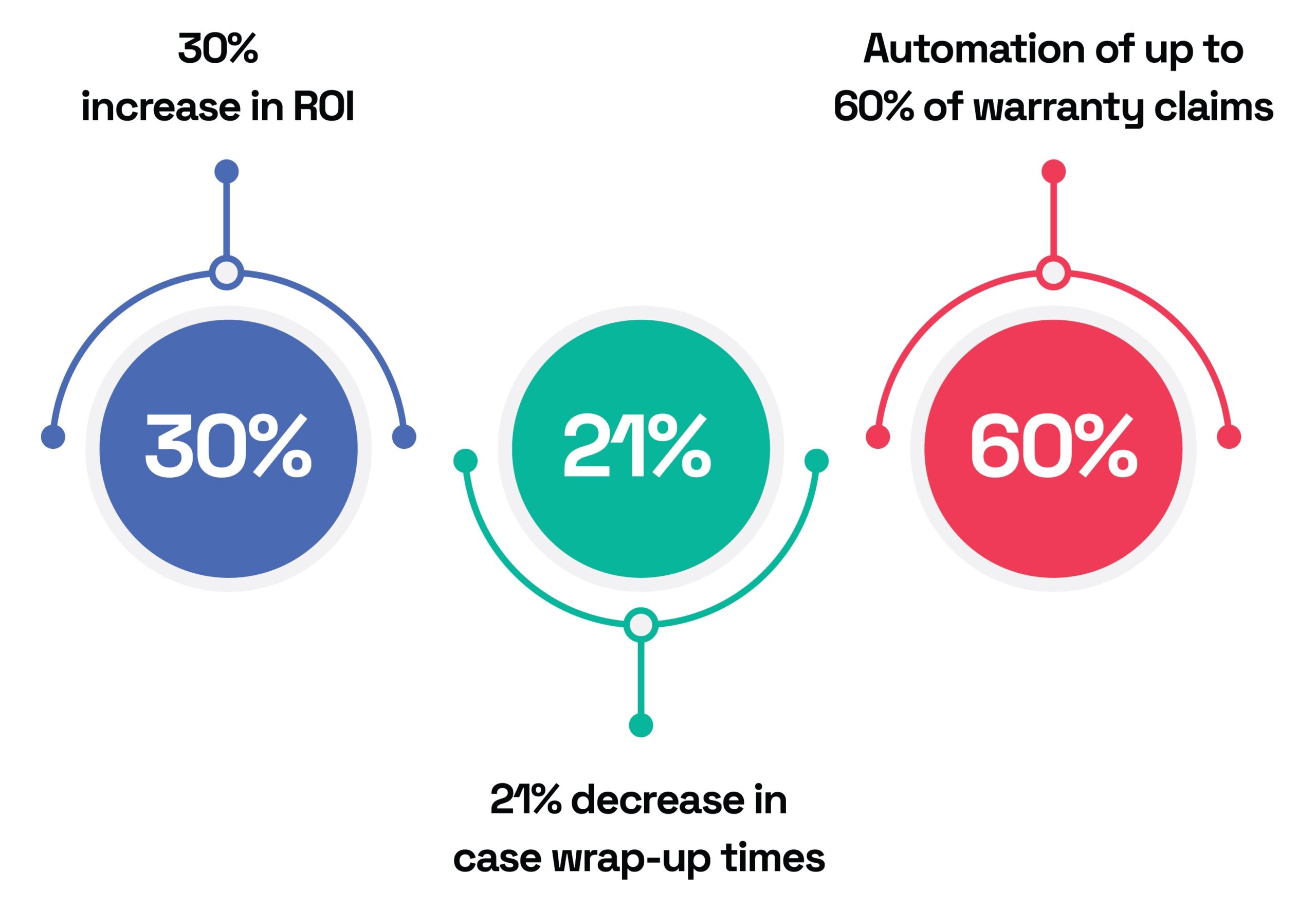
By orchestrating end-to-end service processes, AI agents reduce manual administrative work and allow human experts to focus on strategic customer relationships and complex sales negotiations.
This shift allows sales and service teams using Salesforce Sales Cloud for Manufacturing to concentrate on high-value work rather than repetitive CRM updates.
Conclusion
Redefining B2B sales in 2026 requires a new mindset: treating AI as digital labor rather than just a tool.
By combining Agentforce Sales Cloud with a robust Salesforce Manufacturing Cloud implementation, manufacturers can connect their value chain, improve forecasting accuracy, and empower sales teams to focus on revenue growth instead of operational tasks.
The era of simple automation is ending.
The era of the autonomous manufacturing agent has begun—where AI-driven systems and B2B sales automation Salesforce solutions help organizations scale sales operations, improve customer relationships, and achieve operational excellence.
Frequently Asked Questions (FAQs)
1. What is Agentforce Sales Cloud?
Agentforce Sales Cloud is Salesforce’s AI-powered platform that enables autonomous digital agents to automate sales processes such as lead qualification, meeting scheduling, and workflow automation.
2. How does Salesforce help manufacturers improve sales operations?
Salesforce for manufacturers provides CRM tools that help manage customer relationships, automate sales processes, forecast demand, and streamline operations across the manufacturing value chain.
3. What is Salesforce Manufacturing Cloud implementation?
A Salesforce Manufacturing Cloud implementation involves configuring Salesforce to manage sales agreements, demand forecasting, partner relationships, and customer engagement for manufacturing companies.
4. How is Salesforce used in the manufacturing industry?
Salesforce in manufacturing industry helps companies manage B2B relationships, track sales performance, automate workflows, and connect production planning with customer demand.
5. What is B2B sales automation in Salesforce?
B2B sales automation Salesforce solutions automate repetitive sales tasks such as lead qualification, outreach, follow-ups, and forecasting to improve efficiency and increase revenue.
6. What is Salesforce Sales Cloud for Manufacturing?
Salesforce Sales Cloud for Manufacturing is a specialized CRM solution designed to help manufacturers manage complex sales agreements, customer relationships, and demand forecasting.

Motivated Salesforce Developer with hands-on experience in Apex, Lightning Web Components (LWC), and Salesforce customization. Passionate about building efficient CRM solutions, enhancing user experience, and continuously learning new technologies to drive business innovation.
related blog