Salesforce Platform Roadmap: Spring into Stronger ALM and Security (Spring ’26)

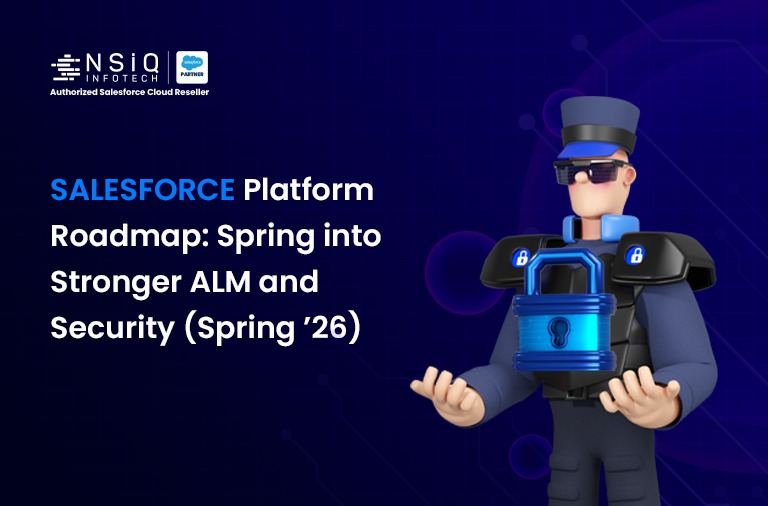
Salesforce Spring ’26 marks a major step forward for Application Lifecycle Management (ALM) and platform security, especially for teams managing multiple sandboxes, frequent releases, and strict compliance needs. The focus this release is clear: ship faster, safer, and with confidence – without adding operational complexity.
Admins, developers, and IT leaders can expect smarter DevOps tooling, tighter environment governance, and stronger security controls baked directly into the platform.
Why ALM and Security Matter – Right Now
Modern Salesforce teams face growing pressure from three directions:
- Release Velocity
Agile delivery means more frequent deployments, hotfixes, and parallel development streams. - Environment Sprawl
Multiple sandboxes, scratch orgs, and pipelines make consistency and control harder. - Rising Security Expectations
Enterprises demand stronger access control, auditability, and compliance by default.
Spring ’26 addresses these challenges head-on:
- Reducing manual ALM steps
- Increasing visibility across environments
- Embedding security earlier in the development lifecycle
What Is Salesforce ALM on the Platform?
Salesforce ALM is the end-to-end process of planning, building, testing, releasing, and securing Salesforce applications across environments. It spans tools and capabilities across:
- Sandboxes & Scratch Orgs
- Source-driven development
- DevOps Center
- Change sets, packaging, and pipelines
- Org-level security and governance
Spring ’26 strengthens this foundation with more automation, guardrails, and intelligence.
What’s New in Spring ’26: ALM Enhancements
Smarter Sandbox Management
- Faster sandbox creation and refresh workflows
- Improved visibility into sandbox purpose, owner, and lifecycle
- Better alignment between sandboxes and DevOps pipelines
Result: Fewer environment conflicts and cleaner development cycles.
DevOps Center: More Control, Less Friction
Spring ’26 continues Salesforce’s investment in DevOps Center as the default ALM tool:
- Enhanced pipeline status and deployment insights
- Improved conflict detection before promotion
- Clearer change tracking from dev → test → production
This makes DevOps Center more viable for enterprise-grade CI/CD, even for teams without deep Git expertise.
Source-Driven Development, Simplified
- Better alignment between org metadata and source control
- Reduced deployment errors caused by metadata drift
- Cleaner promotion paths across environments
Outcome: Developers spend less time fixing deployments and more time building features.
Spring ’26 Security Enhancements: Secure by Design
Security is no longer an afterthought – it’s embedded into the platform lifecycle.
Stronger Access & Identity Controls
- More granular permission and access management
- Improved session and login security policies
- Enhanced identity visibility for admins
This helps reduce over-permission and insider risk.
Proactive Security Posture Management
- Expanded security health insights
- Clearer recommendations to fix org vulnerabilities
- Stronger alignment with enterprise security standards
Admins get actionable guidance – not just alerts.
Better Audit & Compliance Readiness
- Improved event monitoring and audit trails
- Clearer tracking of configuration and access changes
- Easier compliance reporting for regulated industries
This is especially valuable for finance, healthcare, and public-sector orgs.
Secure DevOps: Bridging ALM and Security
Salesforce Spring ’26 brings ALM and security closer together:
- Security checks earlier in the deployment process
- Reduced risk of insecure configs reaching production
- Better collaboration between dev, admin, and security teams
This shift supports DevSecOps – where security is built into every release, not bolted on later.
Real-World Impact for Salesforce Teams
Admins
- Less manual environment cleanup
- Clearer governance and access control
- Faster issue resolution with better visibility
Developers
- Fewer deployment surprises
- Cleaner pipelines and source alignment
- More confidence shipping changes
IT & Security Teams
- Stronger compliance posture
- Better audit readiness
- Reduced operational risk
Governance Best Practices for Spring ’26
To get the most value from these enhancements:
- Standardise sandbox naming and purpose
- Adopt DevOps Center for controlled deployments
- Apply least-privilege access consistently
- Review security health checks quarterly
- Document ALM and release processes clearly
Technology alone isn’t enough – process discipline multiplies its impact.
Mini Case Example
A mid-size enterprise managing 20+ Salesforce sandboxes:
- Reduced deployment failures by 30% using DevOps Center
- Cut sandbox refresh coordination time by 40%
- Improved audit readiness with centralised access tracking
Spring ’26 made governance scalable without slowing delivery.
Conclusion
Salesforce Spring ’26 reinforces a clear platform direction:
Faster innovation with stronger control.
By enhancing ALM tooling and embedding security deeper into the platform, Salesforce empowers teams to:
- Deliver features more reliably
- Manage complex environments with confidence
- Meet enterprise security and compliance expectations
- Reduce risk without slowing down innovation
The winning approach is incremental adoption:
Start by improving sandbox governance, standardise deployments with DevOps Center, and layer in security best practices early.

related blog