Salesforce Sales Cloud – Sell Smarter and Faster

Sales Cloud is the world’s #1 CRM platform designed to support sales, marketing, and commerce. It’s not just a digital Rolodex; it is an engine for revenue growth, designed to move prospects through the pipeline efficiently.
Key Features at a Glance:
- Lead & Opportunity Management: Track leads from click to close. Gain complete visibility into deal stages, probability, and competitor activity.
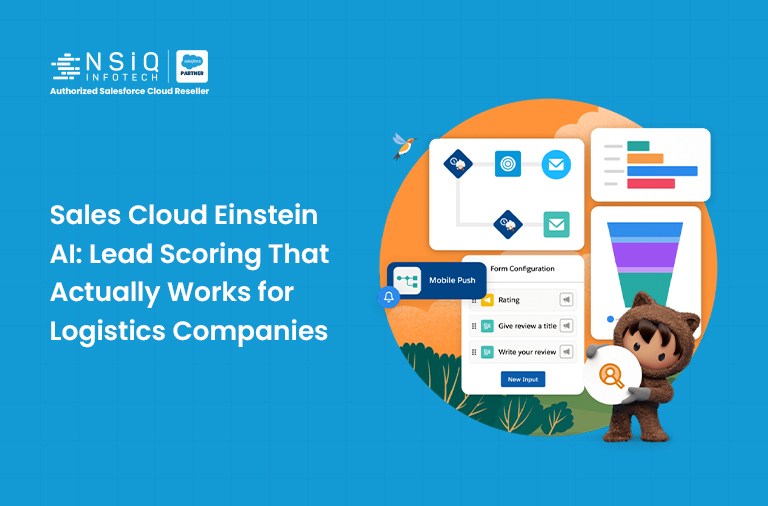
- Salesforce Einstein (AI): Features like Lead Scoring predict which prospects are most likely to convert, allowing reps to prioritize their time on high-value targets.
- Workflow and Approvals: Automate manual business processes. For example, automatically discount approvals or assign tasks based on deal size.
- Sales Forecasting: Get a real-time view of your business health. Forecast revenue accurately and track team performance against quotas.
- Reports and Dashboards: Highly customizable visualizations of your sales data, accessible on desktop or mobile.
Who is it for?
Any organization with a sales team, whether B2B or B2C, that needs to track a sales pipeline, manage customer relationships, and increase revenue velocity.
Salesforce Service Cloud – Revolutionize Customer Support
Acquiring a customer is only half the battle; retaining them is where long-term value lies. Service Cloud is designed to deliver personalized, intelligent support faster than ever before.
Key Features at a Glance:
- Omnichannel Routing: Deliver support across any channel – phone, email, chat, SMS, social media – from a single console. The system automatically routes cases to the best-suited agent.
- Case Management: A unified workspace for agents that provides a complete view of the customer context, interaction history, and necessary tools to resolve issues quickly.
- Knowledge Base: Build and manage a repository of articles and FAQs. This helps agents find answers fast and allows customers to help themselves via self-service portals.
- Service Process Automation: Automate repetitive tasks, such as assigning cases or sending follow-up emails, freeing agents to handle complex issues.
- Field Service: (Often an add-on) For companies with on-site operations, this manages mobile employees, dispatching, and work orders.
Who is it for?
Any company with a customer support, help desk, or field service function that seeks to improve response times, increase agent productivity, and boost customer satisfaction scores (CSAT).
The Power of Synergy (Sales + Service)
While powerful individually, Sales Cloud and Service Cloud are designed to work together seamlessly.
When integrated, you eliminate the “left hand doesn’t know what the right hand is doing” problem. A sales rep looking at an account can see that the client currently has a critical open support ticket (and perhaps should delay an upsell call). Conversely, a support agent can see the customer’s status and route them to a VIP support tier.
This is the true “Customer 360.”
Navigating Editions and Pricing Structure
Salesforce pricing can be complex because it is highly scalable. It utilizes a “per user, per month” subscription model, billed annually.
Crucial Note for Enterprises: The list prices below are standard. Large MNCs typically negotiate custom contracts involving volume discounts, multi-year terms, and bundled products. Always consult with a salesforce consultant in USA for accurate quoting.
Salesforce generally structures its editions into four main tiers for both Sales and Service Clouds. As you move up tiers, you gain more customization capabilities, storage, API access, and advanced features.
1.Essentials Edition (Small Business Starter)
- Target: Startups and very small teams (up to 10 users).
- Features: Basic lead and case management, customizable reports.
- Pricing: Entry-level affordability (e.g. ~$25/user/month range).
2.Professional Edition (Complete CRM)
- Target: Mid-sized businesses needing standardized processes.
- Features: Adds rules-based lead scoring, collaborative forecasting, and contract management. No custom code allowed.
- Pricing: Mid-tier (e.g. ~$80/user/month range).
3.Enterprise Edition (Most Popular Deep Customization)
- Target: Large companies with complex processes.
- Features: The standard for most MNCs. Adds advanced workflow automation, custom code capabilities (Apex), and advanced reporting.
- Pricing: Upper-mid tier (e.g. ~$165/user/month range).
4.Unlimited Edition (Maximum Power & Support)
- Target: Global enterprises requiring massive scale.
- Features: Includes everything in Enterprise plus unlimited custom apps, increased storage limits, premier support, and often bundles in sandbox environments for testing.
- Pricing: Premium tier (e.g. ~$330+/user/month range).
The Betterment Roadmap – Which Cloud for Which Company?
Choosing the right tools depends entirely on your business maturity and goals. Here is how different company types leverage these clouds for betterment.
The High-Growth Startup / SMB
- The Challenge: Leads are in spreadsheets; support happens in a shared Gmail inbox.
- The Solution: Start with Sales Cloud Essentials. Centralize customer data immediately to professionalize operations.
- The Betterment: Establishes a “single source of truth” early, preventing future data nightmares as you scale.
The Mid-Market Company
- The Challenge: Growing pains. Sales processes aren’t standardized across regions; support volume is overwhelming agents.
- The Solution: Sales & Service Cloud Professional or Enterprise. You need process enforcement. Implement automation to handle repetitive tasks in both sales and service.
- The Betterment: Increases efficiency and ensures consistent customer experiences regardless of which agent or rep they talk to.
The Large MNC / Enterprise
- The Challenge: Complexity and silos. Multiple legacy systems, global compliance needs, and a fragmented customer view across business units.
- The Solution: Sales & Service Cloud Unlimited, heavily integrated via MuleSoft. You need deep customization to match complex workflows and AI (Einstein) to manage scale.
- The Betterment: True digital transformation. Breaking down global silos provides the 360-degree view necessary for strategic decision-making at the executive level and personalized interactions at the customer level.
Conclusion: Technology Needs Strategy
Salesforce Sales and Service Clouds are incredibly powerful tools, but they are just that -tools. Buying a Ferrari doesn’t make you a race car driver; you need to know how to drive it on the right track.
For MNCs, the success of a Salesforce implementation rarely hinges on the software itself, but rather on change management, process re-engineering, and proper integration.
As your strategic IT partner, we don’t just implement Salesforce. We align it with your business goals to ensure maximum ROI and a seamless customer journey.
Are you ready to unify your sales and service operations? Contact our Salesforce Center of Excellence today for a consultation.

Nihar Sharma is the Co-Founder and CEO, driving innovation, growth, and customer success. With expertise in business strategy and technology, he leads digital transformation and builds scalable solutions, delivering long-term value for clients.
related blog