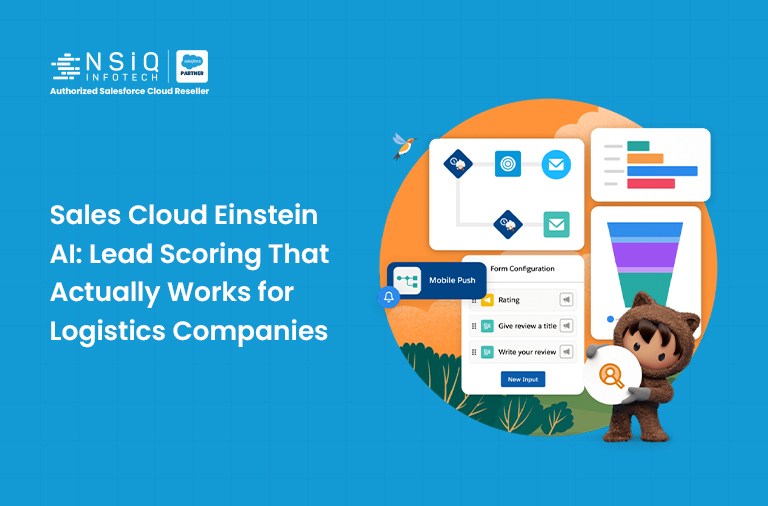
Sales Cloud Einstein AI: Lead Scoring That Actually Works for Logistics Companies

Introduction
In the logistics industry, speed and accuracy decide everything—from delivery timelines to closing deals. But when it comes to sales, many logistics companies still rely on manual lead qualification, gut instinct, or outdated CRM rules.
This leads to:
- Wasted time on low-quality leads
- Missed high-value opportunities
- Inconsistent sales performance
steiThis is where Salesforce Einn AI and Sales Cloud Einstein come in.
Instead of guessing which lead will convert, AI-driven salesforce lead scoring uses real data to tell your team exactly where to focus.
In this deep dive, you’ll learn how Salesforce Einstein AI transforms lead scoring specifically for logistics businesses—and how you can implement it effectively.
Why Traditional Lead Scoring Fails in Logistics
1. Static Rules Don’t Reflect Real-World Complexity
Most logistics companies still use:
- Manual scoring (assigning points based on assumptions)
- Basic CRM filters
Example:
- +10 points for “company size > 100”
- +5 points for “email opened”
But logistics deals depend on:
- Shipment frequency
- Route complexity
- Contract size
- Urgency of delivery
Static scoring simply can’t handle this complexity.
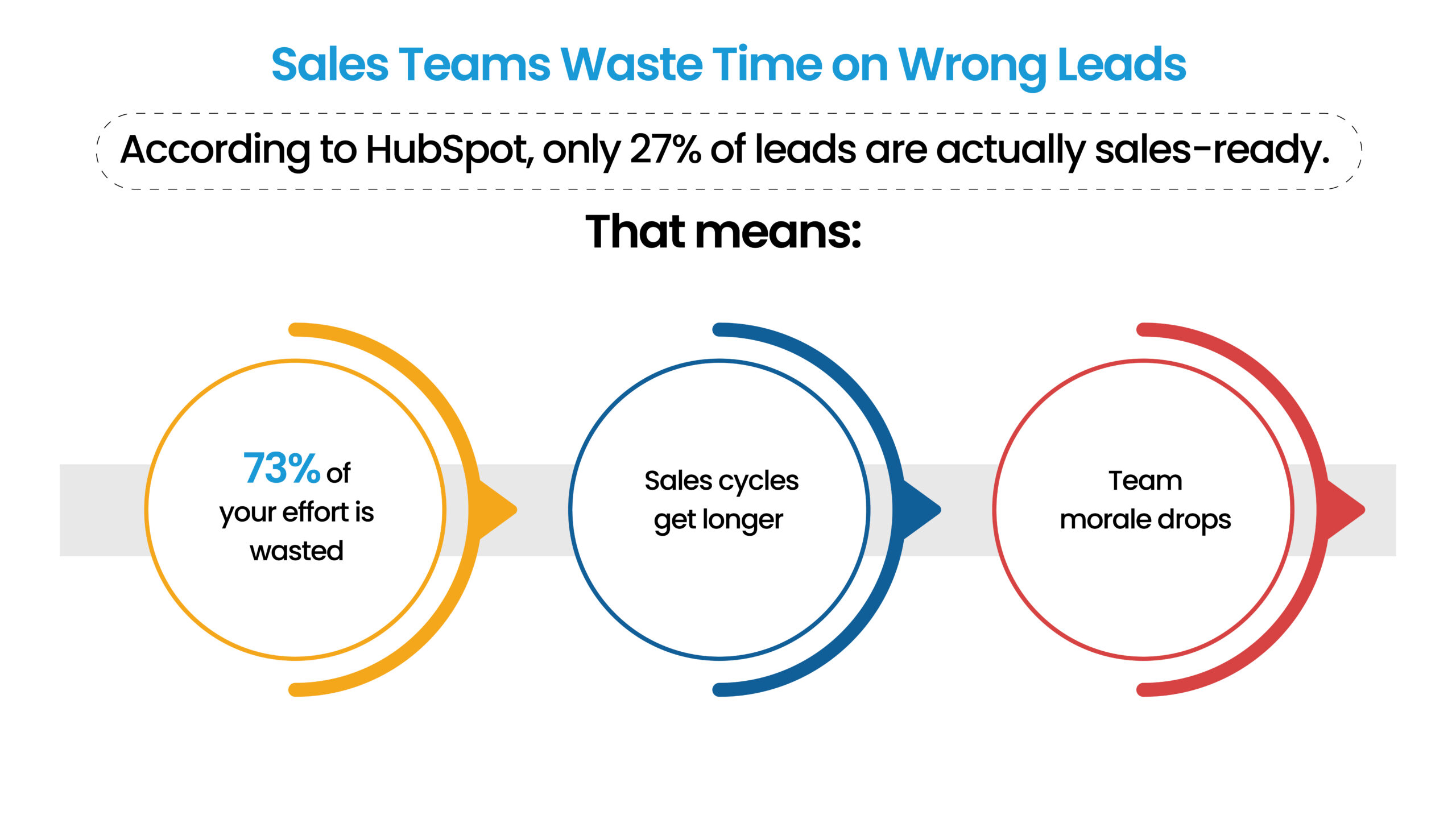
3. No Learning From Past Deals
Traditional systems don’t learn from:
- Won deals
- Lost deals
- Customer behavior
So mistakes repeat over time.
What is Salesforce Einstein AI in Sales Cloud?
Salesforce Einstein AI is an artificial intelligence layer built into Salesforce for logistics and other industries. It analyzes historical CRM data and predicts outcomes like:
- Which leads are most likely to convert
- Which opportunities need attention
- What actions improve closing rates
Key Feature: Einstein Lead Scoring
- Automatically scores leads from 1–100
- Uses machine learning (not rules)
- Updates scores dynamically
How Einstein Lead Scoring Works (Step-by-Step)
Step 1: Data Collection
- Past leads
- Opportunities
- Email interactions
- Activity history
Step 2: Pattern Detection
- Industries that convert more
- Deal sizes that close faster
- Behavior of successful customers
Step 3: Predictive Modeling
- Historical success data
- Engagement signals
Step 4: Lead Scoring
- 1–100 scale
- Updated in real time
Step 5: Insights & Recommendations
- Why a lead is high/low score
- Suggested next actions
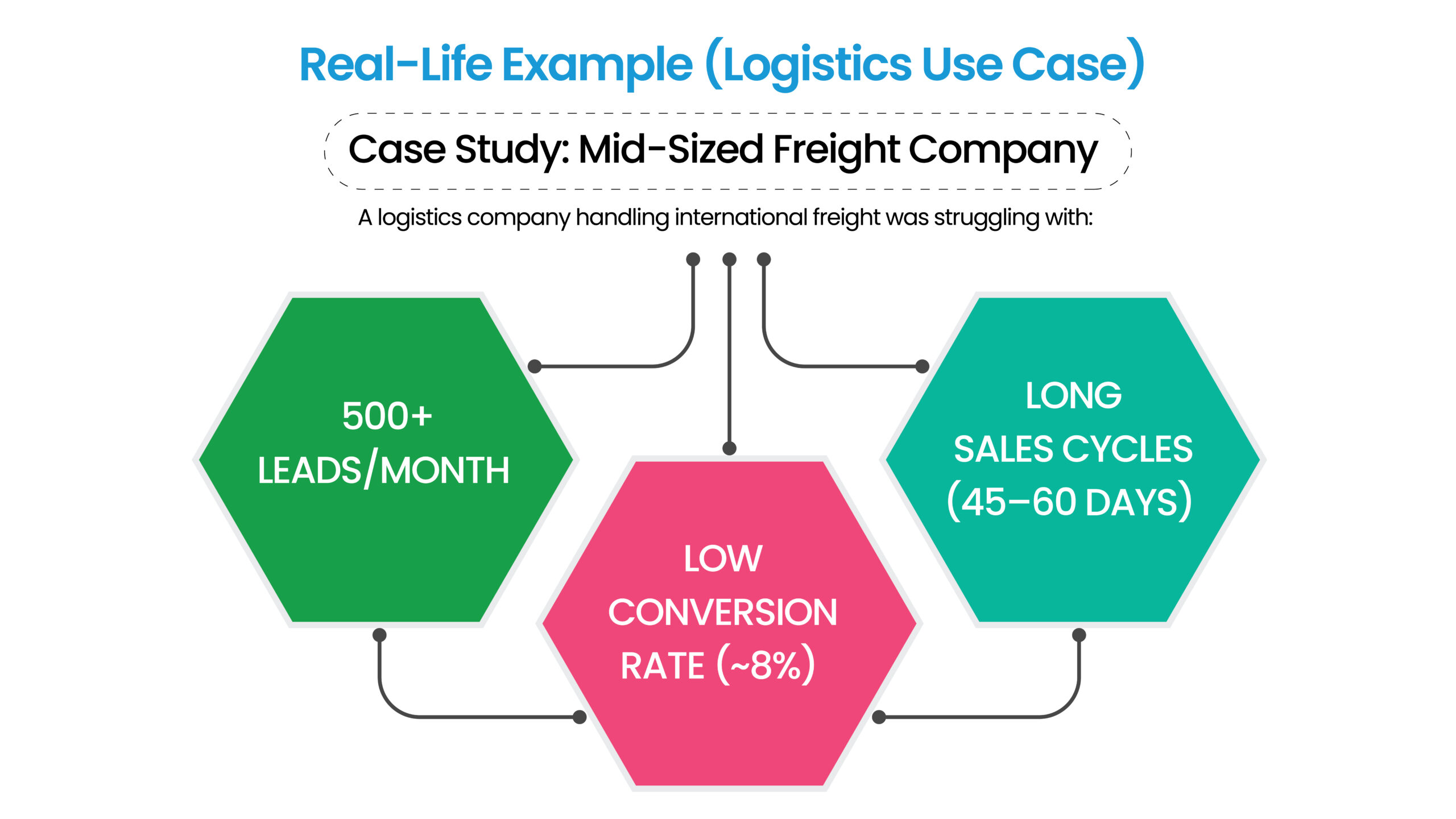
What They Did
- Sales Cloud Einstein
- AI-based salesforce lead scoring
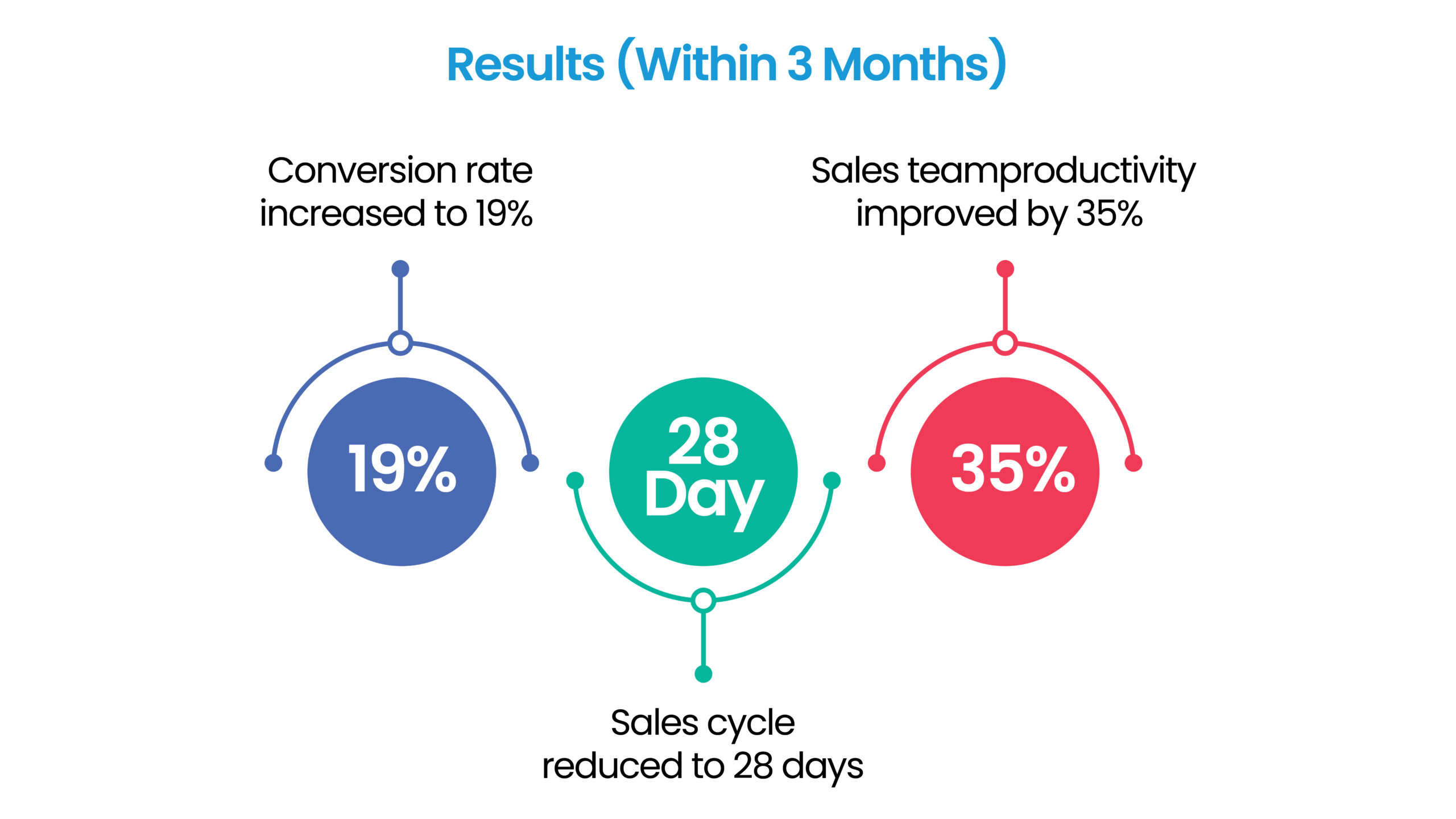
Within just 3 months, conversion rates rose to 19%, sales cycles shortened to 28 days, and team productivity improved by 35%, demonstrating significant performance gains.
Why It Worked
- Leads from specific import/export industries converted faster
- Frequent inquiry behavior = higher intent
- Small businesses with repeat shipments were high-value
Key Benefits of AI Sales Automation for Logistics
1. Focus on High-Intent Leads
Your team spends time where it matters.
2. Faster Sales Cycles
AI prioritization reduces decision time.
3. Better Forecast Accuracy
Predictive insights improve planning.
According to McKinsey & Company, companies using AI in sales see up to 50% increase in leads and appointments.
4. Continuous Learning
Unlike manual scoring, AI improves over time.
Logistics-Specific Use Cases
1. Route-Based Lead Prioritization
- High-demand shipping routes
- Region-specific opportunities
2. Contract Value Prediction
- Which leads will result in large contracts
- Which are one-time shipments
3. Customer Lifetime Value (CLV)
- Long-term clients vs short-term deals
Common Mistakes to Avoid
1. Poor Data Quality
AI is only as good as your data.
Fix:
- Clean CRM regularly
- Standardize fields
2. Not Training Sales Teams
If your team doesn’t trust AI, they won’t use it.
Fix:
- Show insights
- Share success stories
3. Expecting Instant Results
AI improves over time—not overnight.
Implementation Guide for Logistics Companies
Step 1: Set Up Salesforce CRM Properly
- Lead fields are complete
- Historical data is available
Step 2: Enable Einstein Lead Scoring
- Turn on lead scoring
- Configure settings
Step 3: Validate Data
- Duplicate records
- Missing values
Step 4: Train Your Team
- What scores mean
- How to prioritize
Step 5: Monitor & Optimize
- Conversion rates
- Score accuracy
1. What is Salesforce Einstein AI?
It’s an AI layer in Salesforce that provides predictive insights and automation.
2. How does Salesforce lead scoring work?
It uses machine learning to assign scores based on historical and behavioral data.
3. Is Salesforce Einstein useful for logistics companies?
Yes, it helps prioritize leads, predict demand, and improve sales efficiency.
4. What is Sales Cloud Einstein?
It’s a Salesforce product that adds AI capabilities to sales processes.
5. How accurate is AI lead scoring?
Accuracy improves over time as more data is analyzed.
6. Can small logistics companies use Einstein AI?
Yes, if they have sufficient CRM data.
7. What data is required for lead scoring?
Lead history, activities, interactions, and conversion outcomes.
8. Does AI replace sales teams?
No, it enhances decision-making—not replaces humans.
9. How long does implementation take?
Typically 2–6 weeks depending on complexity.
10. What is AI sales automation?
Using AI to automate and optimize sales processes.
11. Is Salesforce good as logistics CRM software?
Yes, it can be customized for logistics workflows.
12. Can Einstein predict deal size?
Yes, using historical data patterns.
13. How do you improve lead scoring results?
By maintaining clean and consistent data.
14. Is training required for teams?
Yes, to ensure proper adoption.
15. What is the ROI of using Einstein AI?
Higher conversions, faster sales cycles, and better forecasting.
Conclusion
Logistics companies can no longer afford to rely on guesswork when it comes to sales.
With Salesforce Einstein AI, you move from:
- Reactive selling → Predictive selling
- Manual scoring → Intelligent prioritization
The result?
- Better leads
- Faster closures
- Higher revenue
If you’re serious about scaling your logistics sales, adopting AI-driven sales automation is not optional—it’s essential.
Ready to transform your sales process?
Connect with NSIQ INFOTECH and start leveraging Sales Cloud Einstein today.

Seasoned Senior Salesforce Developer with deep expertise in Apex, Lightning Web Components (LWC), and complex integrations. Proven track record of delivering scalable, high-performance solutions and optimizing business processes to drive efficiency and growth.
related blog