How AI Is Transforming the Future of Jobs

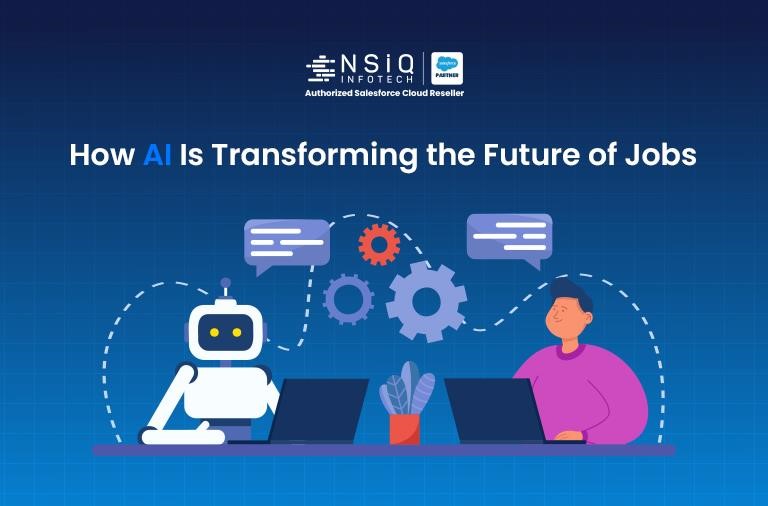
Artificial Intelligence, or AI, has quickly moved from being an interesting idea to becoming a major part of modern life. It is used in phones, cars, hospitals, schools, and almost every type of business. As AI grows smarter, it is also changing the way people work and the kinds of jobs companies need.
AI is not simply replacing humans. Instead, it is changing how work is done, making some tasks easier while creating new types of roles that never existed before. The future of jobs will be shaped by how well people and AI work together.
AI Is Automating Repetitive Work
Many jobs include tasks that are repeated daily, such as:
- entering customer information
- checking documents
- sorting emails
- responding to simple questions
AI systems can perform these tasks faster and without mistakes.
This means employees will spend less time doing routine work and more time doing meaningful tasks that require thinking and creativity.
New Careers Are Appearing Because of AI
As AI becomes common, businesses need people who understand how to develop, manage, and guide it.
This has created new job roles such as:
- AI Specialist
- Machine Learning Engineer
- Data Analyst
- AI Trainer (teaches AI models how to behave)
- Automation Consultant
- Prompt Engineer
- AI Safety and Ethics Officer
These roles did not exist a few years ago, but now companies are actively hiring for them.
Many Existing Jobs Will Change, Not Disappear
AI will not remove all jobs. Instead, it will change how people do them.
For example:
- Teachers will use AI tools to prepare personalized study plans.
- Doctors will use AI to detect symptoms and study reports faster.
- Developers will use AI to write parts of code.
- Marketers will use AI to understand customer behavior.
- Customer support teams will use chatbots for simple questions.
AI becomes a helpful assistant, not a replacement.
Industries Getting Transformed by AI
AI is changing entire industries, such as:
Healthcare
AI helps read medical scans, track diseases, and assist doctors in choosing treatments.
Banking
AI detects fraud, studies financial patterns, and helps customers with automated services.
Education
Students get personalised practice, instant answers, and automatic feedback.
Manufacturing
Robots and smart machines speed up production and reduce errors.
Transportation
AI supports self-driving cars, traffic predictions, and delivery automation.
Every industry is being reshaped, which increases the need for workers who understand AI tools.
Skills Needed in the Age of AI
To grow in the AI-driven world, students and professionals need a mix of technical and human skills.
Technical Skills
- Basic programming
- Data analysis
- Understanding how AI tools work
- Cloud platforms
- Automation tools
Human Skills
These skills cannot be replaced by AI:
- Creativity
- Critical thinking
- Communication
- Leadership
- Emotional intelligence
People who combine technical knowledge with strong human skills will be in great demand.
Why People Will Always Be Important
Even though AI is powerful, it has limitations. AI cannot:
- understand emotions
- make moral decisions
- think creatively like humans
- handle complex relationships
Humans bring judgement, empathy, and innovation – qualities AI does not have.
This is why AI will work with humans, not replace them.
The Future Workplace: Humans and AI Together
The workplace of the future will look like a partnership:
AI will handle:
- heavy data tasks
- repetitive work
- quick predictions
Humans will handle:
- decision-making
- Creative thinking
- teamwork
- problem-solving
Together, they will achieve better results than either could alone.
Conclusion
AI is changing jobs by automating simple tasks, creating new career paths, and improving work efficiency. Instead of taking away opportunities, AI is pushing people to develop new skills and focus on work that requires intelligence, creativity, and empathy. The future belongs to those who learn how to use AI, understand its strengths and work alongside it. AI is not the end of jobs – it is the beginning of a new way of working.

Motivated Salesforce Developer with hands-on experience in Apex, Lightning Web Components (LWC), and Salesforce customization. Passionate about building efficient CRM solutions, enhancing user experience, and continuously learning new technologies to drive business innovation.
related blog