7 Salesforce Sales Cloud Implementation Mistakes Finance Companies Make – And How to Fix Them

Introduction
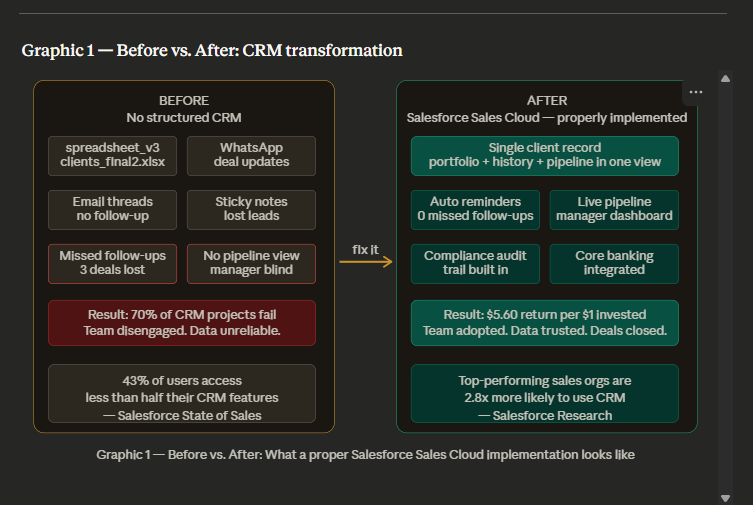
“We spent ₹80 lakhs on Salesforce and our sales team still uses WhatsApp to track deals.”
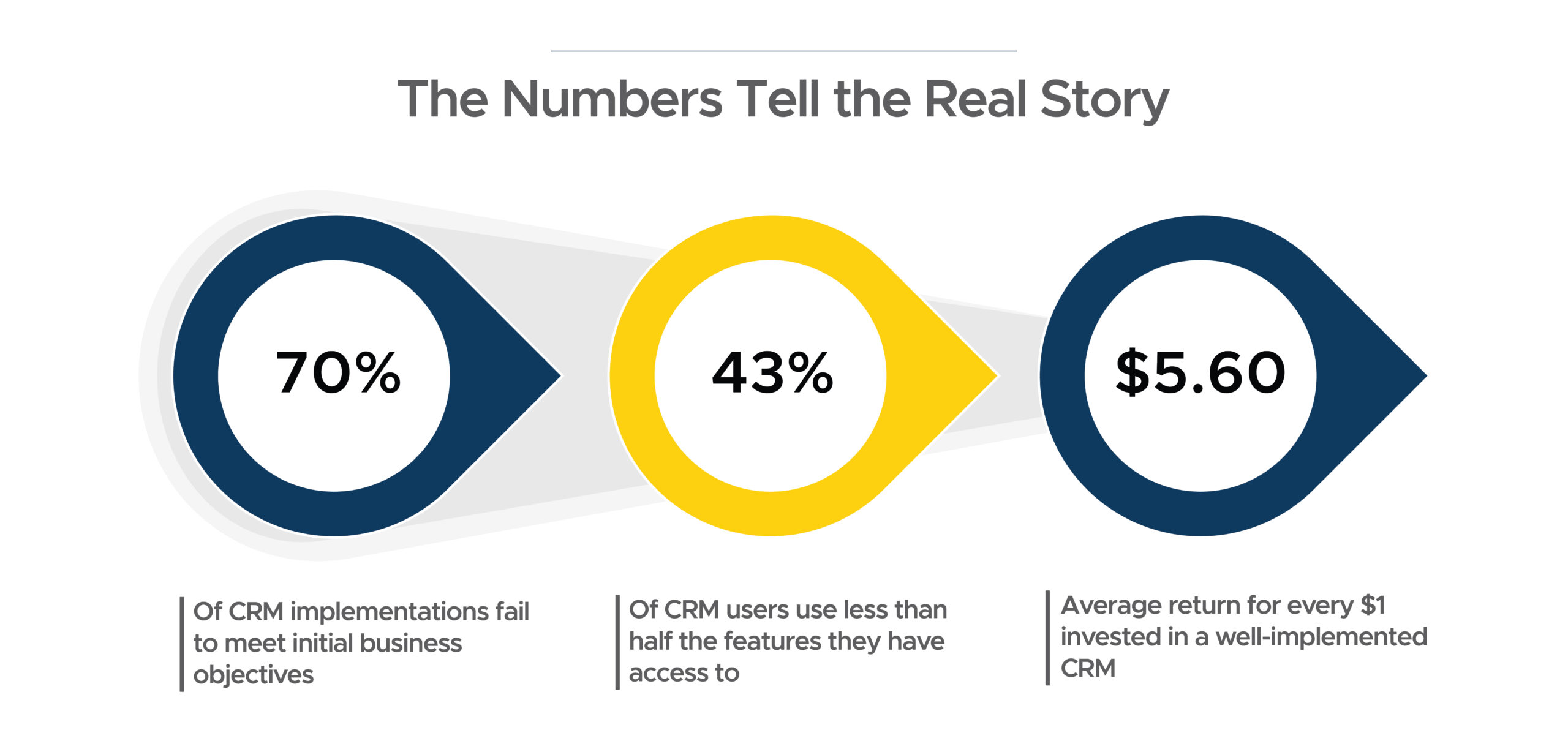
Sound familiar? You’re not alone. Across banks, NBFCs, wealth management firms, and insurance companies, CRM implementation failures follow a remarkably similar pattern—and the problems almost never lie with the platform itself.
The 7 Biggest Mistakes in Salesforce Implementation
1. Process Design
Mistake: Replicating old, broken processes in a new system
Many financial companies simply recreate their existing workflows inside Salesforce, turning it into an expensive spreadsheet.
Fix:
Run a 2-week process audit before implementation. Design your ideal sales journey first, then build Salesforce around it.
2. Compliance & Regulation
Mistake: Ignoring compliance requirements
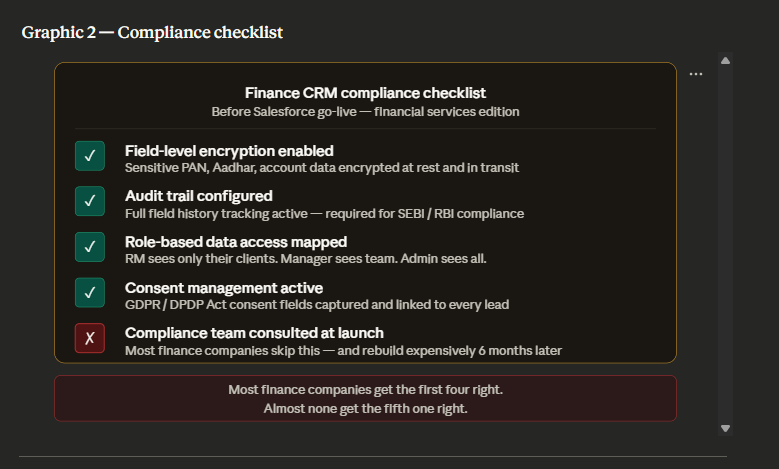
From RBI to SEBI to GDPR, compliance isn’t optional in BFSI.
Fix:
Involve legal and compliance teams from Day 1.
Set up:
- Data encryption
- Audit trails
- Role-based access
3. Data Strategy
Mistake: Migrating dirty data
Duplicate and incomplete data destroys trust and adoption.
Fix:
- Clean data before migration
- Define “clean record” rules
- Use duplicate management
4. User Adoption
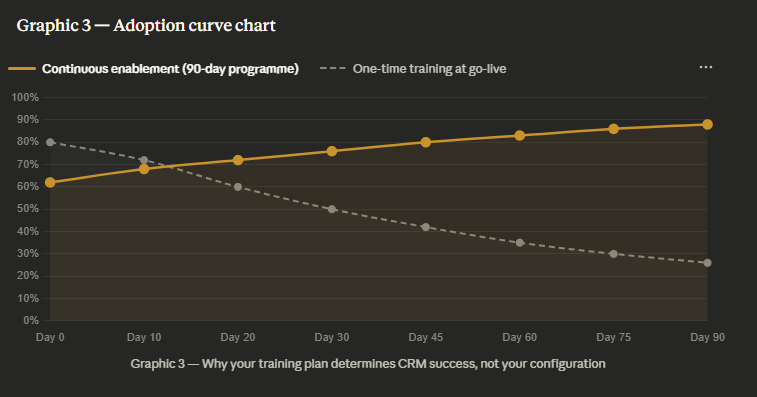
Mistake: One-time training
A 2-day training does not ensure long-term adoption.
Fix:
Create a 90-day adoption program:
- Role-based training
- CRM champions
- Weekly usage tracking
5. Integration Architecture
Mistake: Treating Salesforce as a standalone system
Users switching between multiple systems leads to frustration and low usage.
Fix:
Integrate key systems like:
- Core banking
- Loan systems
- Communication tools
Make Salesforce the single source of truth.
6. Analytics & Reporting
Mistake: No reporting strategy
If KPIs are not defined early, reporting becomes ineffective.
Fix:
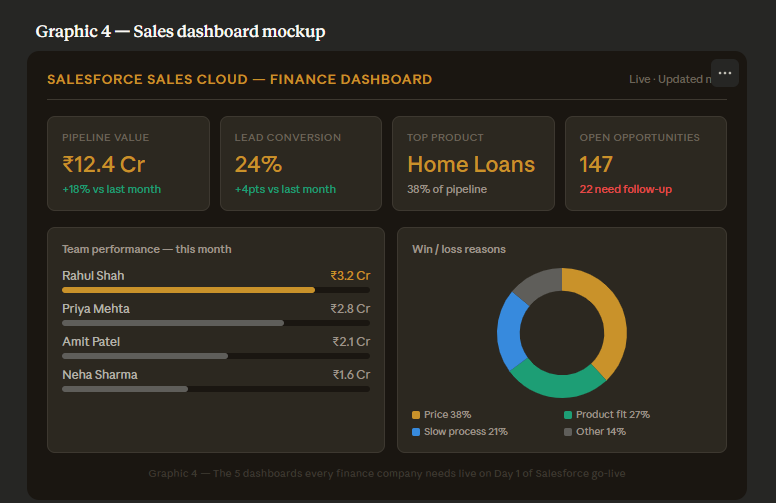
Build 5 key dashboards before go-live:
- Pipeline tracking
- Lead conversion
- Product performance
- Team performance
- Win/loss analysis
7. Strategic Fit
Mistake: Choosing Sales Cloud instead of Financial Services Cloud
Selecting the wrong platform increases customization costs.
Fix:
If you are in BFSI, evaluate:
- Household views
- Referral tracking
- Compliance tools
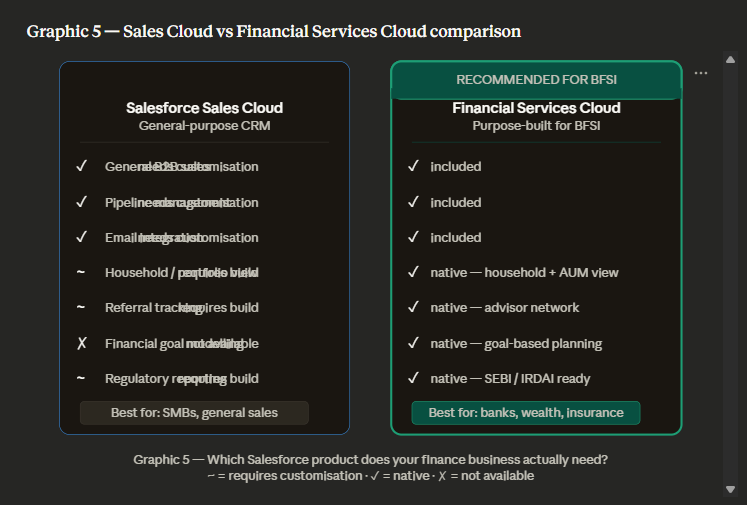
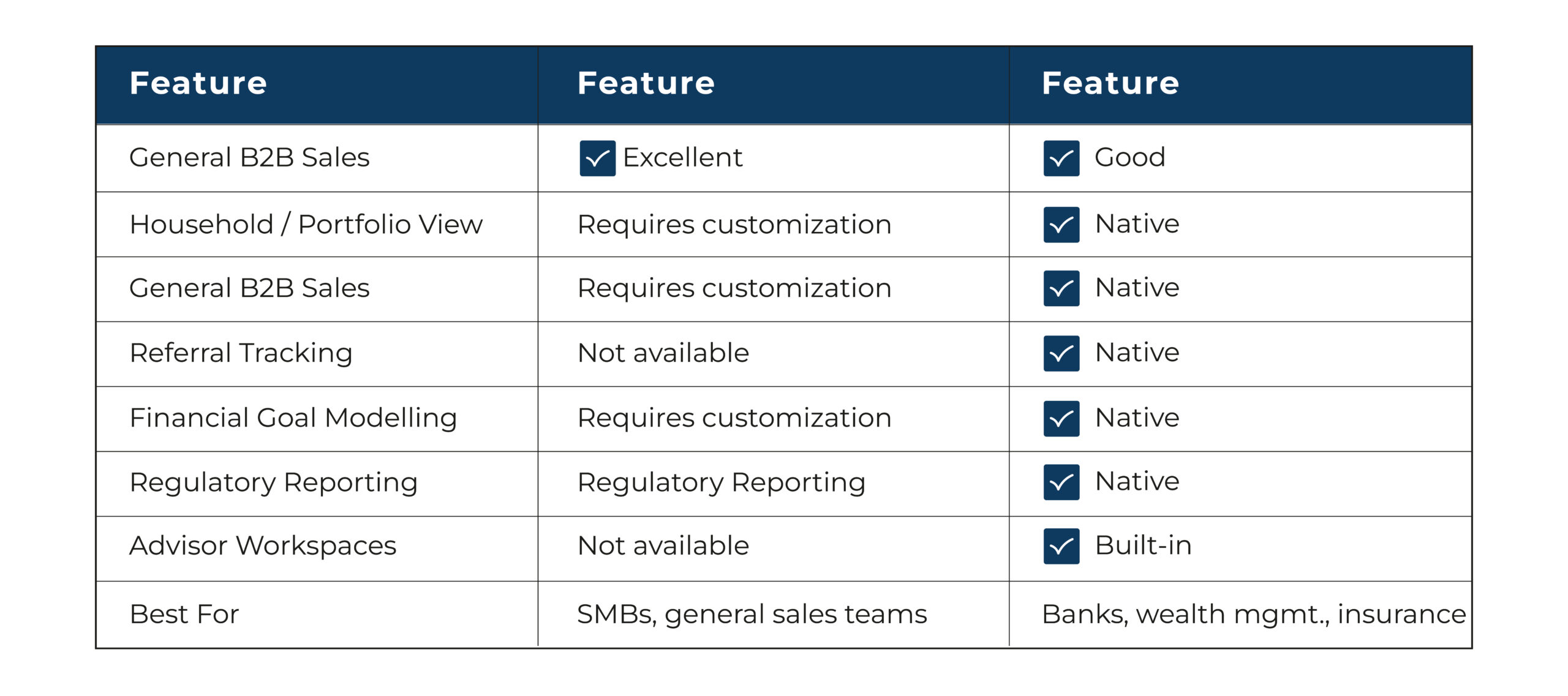
This comparison infographic highlights the key differences between Salesforce Sales Cloud and Financial Services Cloud for BFSI organizations. It showcases how Sales Cloud requires customization for features like household views, referrals, and regulatory reporting, while Financial Services Cloud offers native capabilities such as AUM tracking, advisor networks, and compliance readiness—making it ideal for banks, wealth management, and insurance firms.
Choose the right platform from the beginning.
Sales Cloud vs Financial Services Cloud
Key Takeaways
- Process first, then technology
- Compliance must be built from Day 1
- Data quality determines CRM success
- Adoption requires continuous effort
- Integration is essential
- Define KPIs early
- Choose the right Salesforce product
Real Industry Insights
- Top-performing sales teams are 2.8x more likely to use AI-powered CRM
- 70% of failures come from people and process, not technology
- Most budgets overspend on technology and underinvest in adoption
Frequently Asked Questions
1. Why do Salesforce implementations fail?
Because of poor execution, mainly related to process and user adoption.
2. What is the biggest mistake?
Replicating broken processes instead of redesigning them.
3. Why is compliance important?
Because BFSI industries must follow strict regulatory requirements.
4. How does data quality affect CRM?
Poor data reduces trust, leading to low usage and failure.
5. How can adoption be improved?
By implementing a structured 90-day training, tracking, and support model.
Conclusion
Salesforce success is not about software it is about execution.
Organizations that succeed:
- Invest in process design
- Focus on user adoption
- Build long-term strategy
Final question:
Are you building a CRM for your people, or simply digitizing spreadsheets?

Passionate Senior Salesforce Developer with strong experience in customization, automation, and integration, ensuring seamless Salesforce user experiences.
related blog